Most metaverse pitches die in the second meeting, not because the idea was bad but because no one was able to answer the only question that matters: what do you think this will do for the business on day 90?
If you are evaluating a WordPress development service, you may be somewhere between two failure modes. On one side, agencies selling Decentraland parcels and calling it strategy; on the other, dev shops that can render a beautiful room but never manage to build a system. Sync inventory and services on Monday morning; traffic may spike.
This Metaverse Development Company guide was written for the buyer: someone with a real budget, a real deadline, and no patience for the metaverse to exist only as a render.
What Metaverse Development Actually Means in 2026
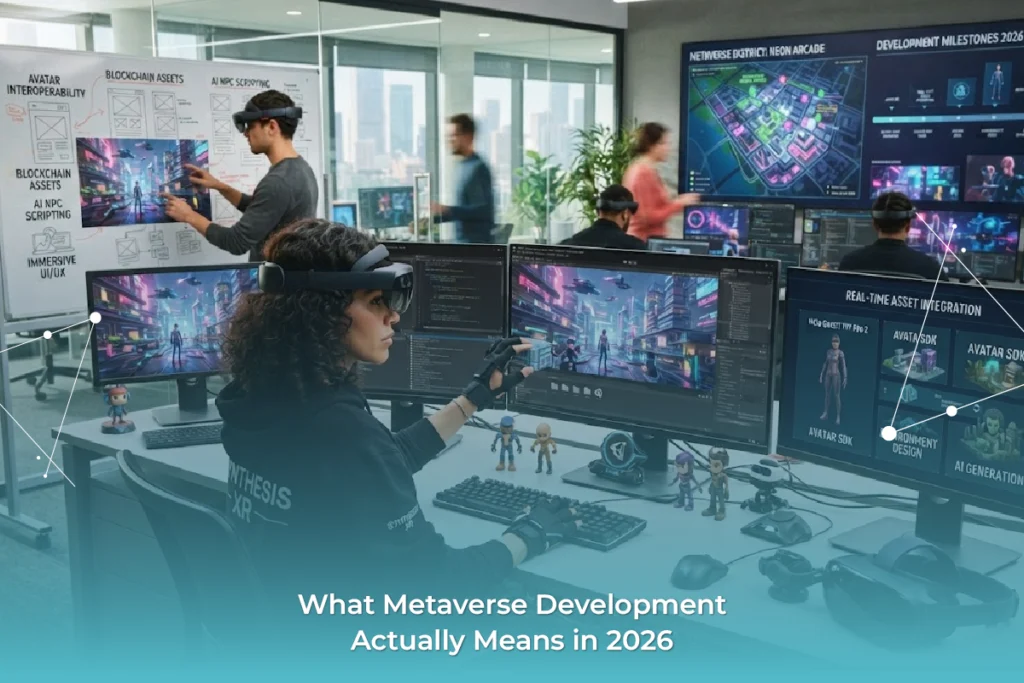
The world has survived its hype cycle, and what has survived is the useful part of it: real-time, spatial, persistent software. Strip away the land speculation, and you are left with a technology stack that can do four things ordinary web software may not.
It Represents Scale and Space
A 40-ton press, a surgical field, a hotel floor plan and a photo that flattens a 3D scene that may not exist.
It Supports Presence
Support presence: multiple people in the same environment, at the same time, seeing the same state change.
It Carries State
A configuration that a customer has built at 2 a.m. can still be there, priced and quotable when sales open the CRM.
It Rehearses Reality
Training a technician on a virtual machine costs a fraction of stopping the real line.
Everything worth building sits at the intersection of at least two of these. This intersection is where the metaverse development solution may stop being a marketing category and start being infrastructure.

Before You Commission A World, Prove The Thesis.
Start with a fixed-scope phase one: a defined discovery and a working artefact at the end, not a render. You’ll know what it does for the business before you commit the budget.
The Metaverse Development Services Stack
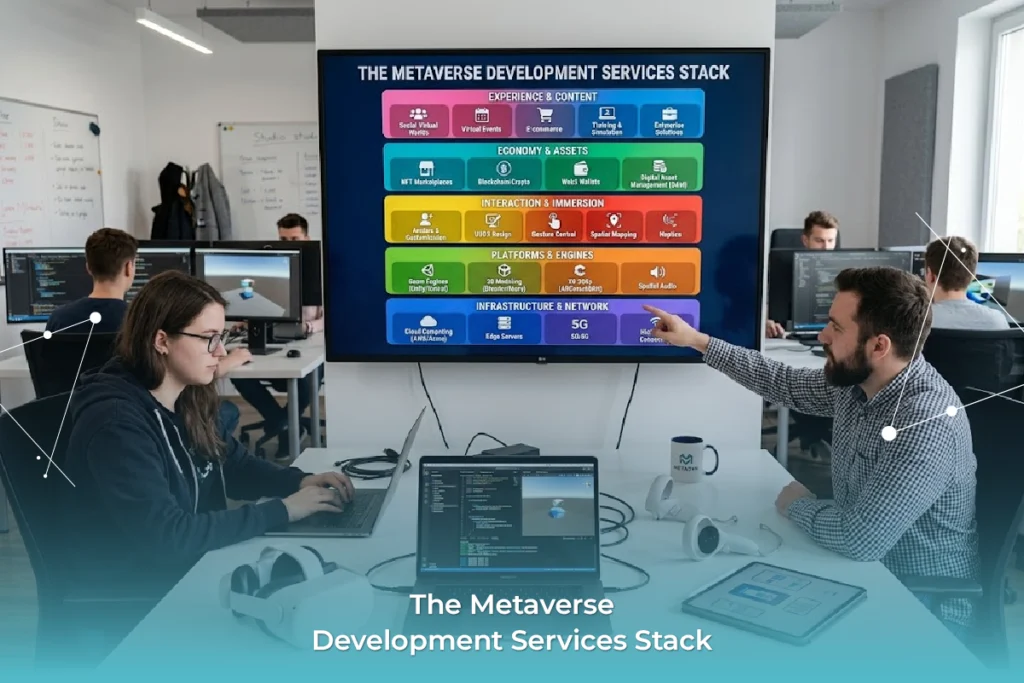
When a metaverse development company quotes you, they are quoting the subset of the following that protects you from paying twice.
1. Metaverse Consulting Services
This covers use case selection, platform choice, feasibility (WebGL versus native versus headset), device target, data flow, and a hard-nosed answer to whether you need a metaverse at all. The good metaverse consulting service occasionally talks you out of the project and into a cheaper build.
2. 3D Asset Production and Rendering
Nothing in the virtual environment looks credible if the assets don’t. This means production-grade modelling, UV work, PBR texturing, LOD optimization, and photoreal 3D rendering for the marketing collateral that can inevitably be pulled from the same source files.
3. Metaverse App Development
The application layer: sessions, multiplayer networking, avatars, authentication, and in-world commerce, integration, and analytics with the systems that run your business, like ERP, CRM, LMS, and PIM.
This is where metaverse app development projects quietly happen daily, as it’s glamorous and is the part that determines whether the experience produces data anyone can act on.
4. Metaverse Game Development Services
A gamified environment, progression system, economy design, and the engine-level performance that keeps a persistent world stable under the load. Metaverse game development services deserve their own section, as buyers can underestimate them.
5. Immersive Layers: AR, VR, and Digital Twins
The metaverse can rarely live alone; it can also be extended by AR experiences that can pull the virtual object into the customer’s living room. VR development covers headset-based training, and digital twins keep the virtual environment synchronized with real-world sensor data.
Metaverse Development Solutions That Generate Measurable Return
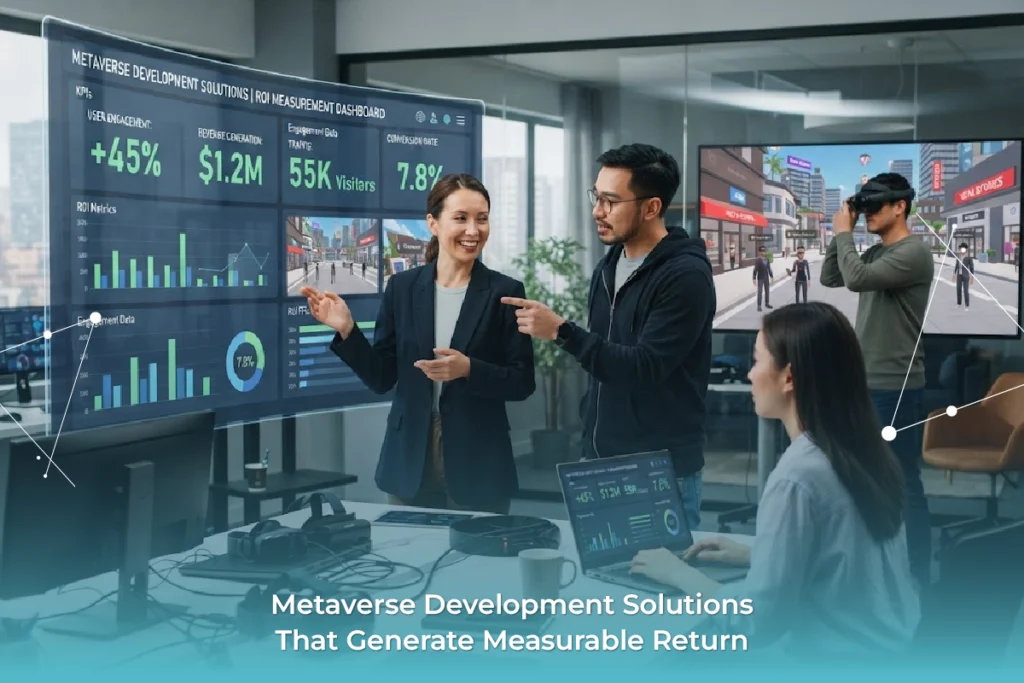
Here’s an uncomfortable pattern across the projects that can survive the first year. None of them is a world, but they are the tools that happen to be spatial.
Spatial Commerce and Product Configuration
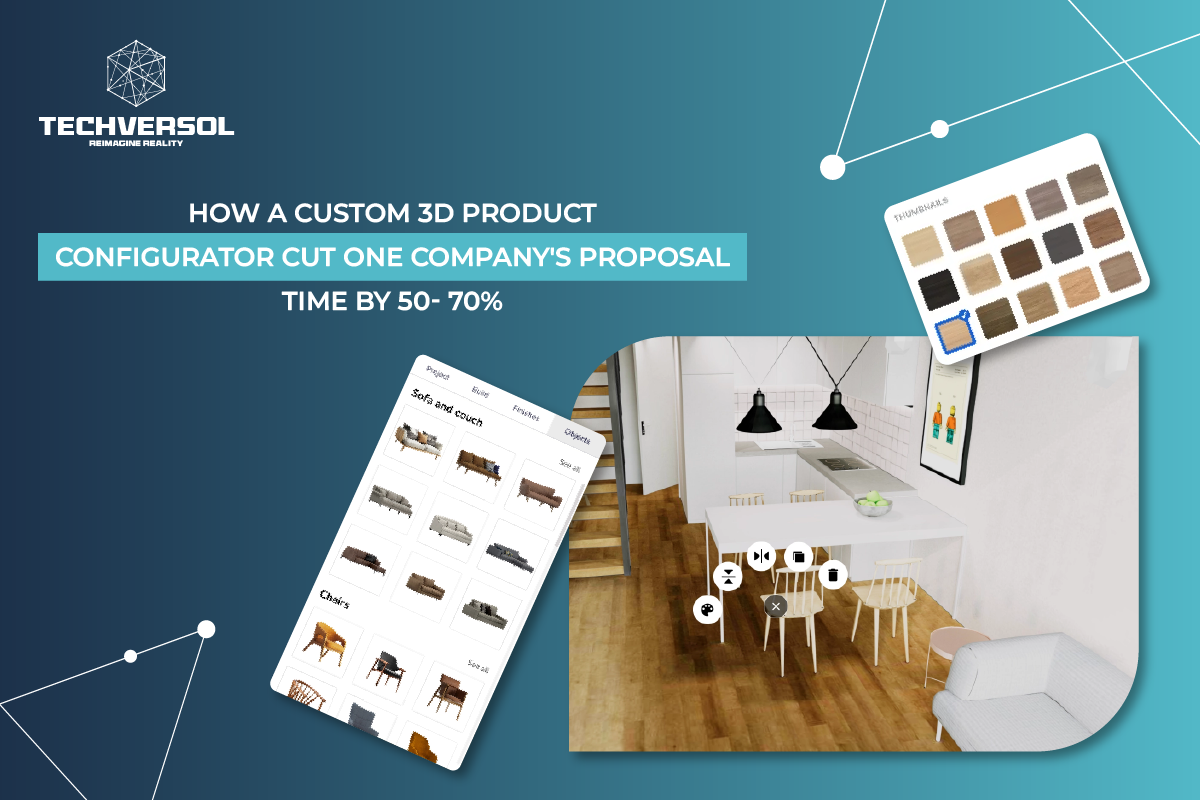
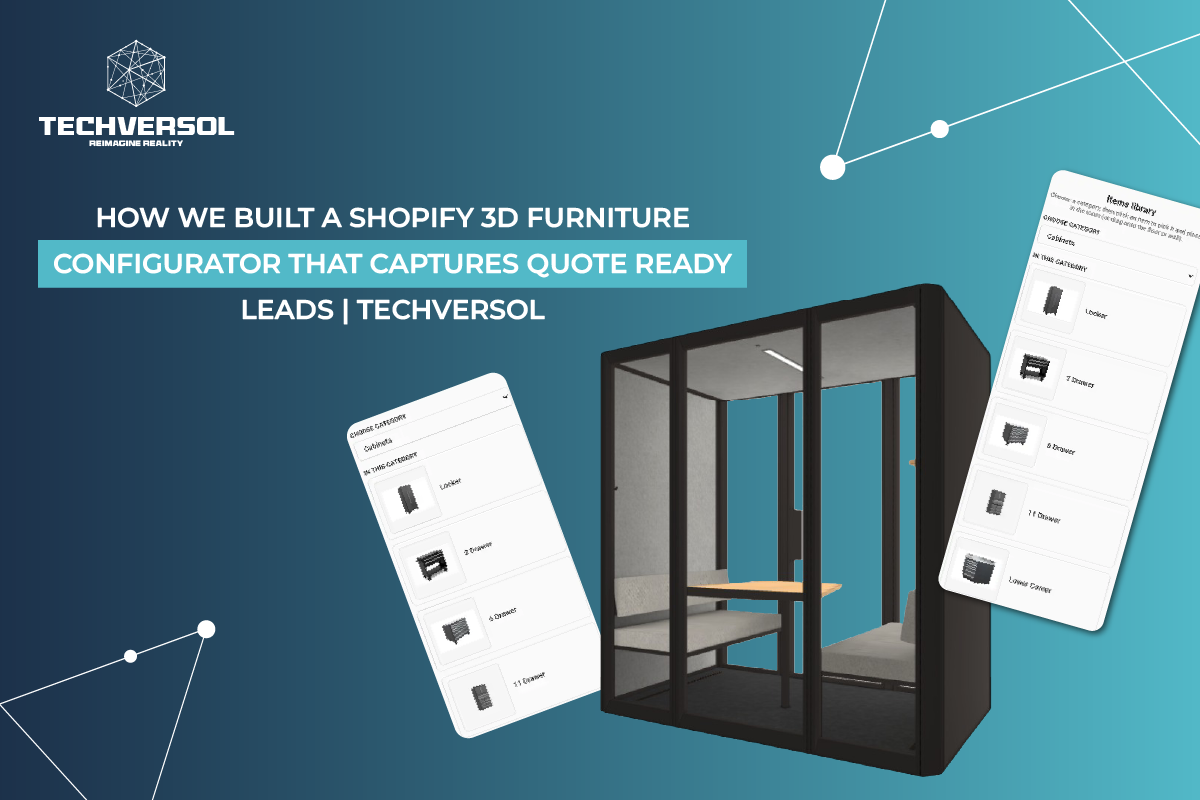
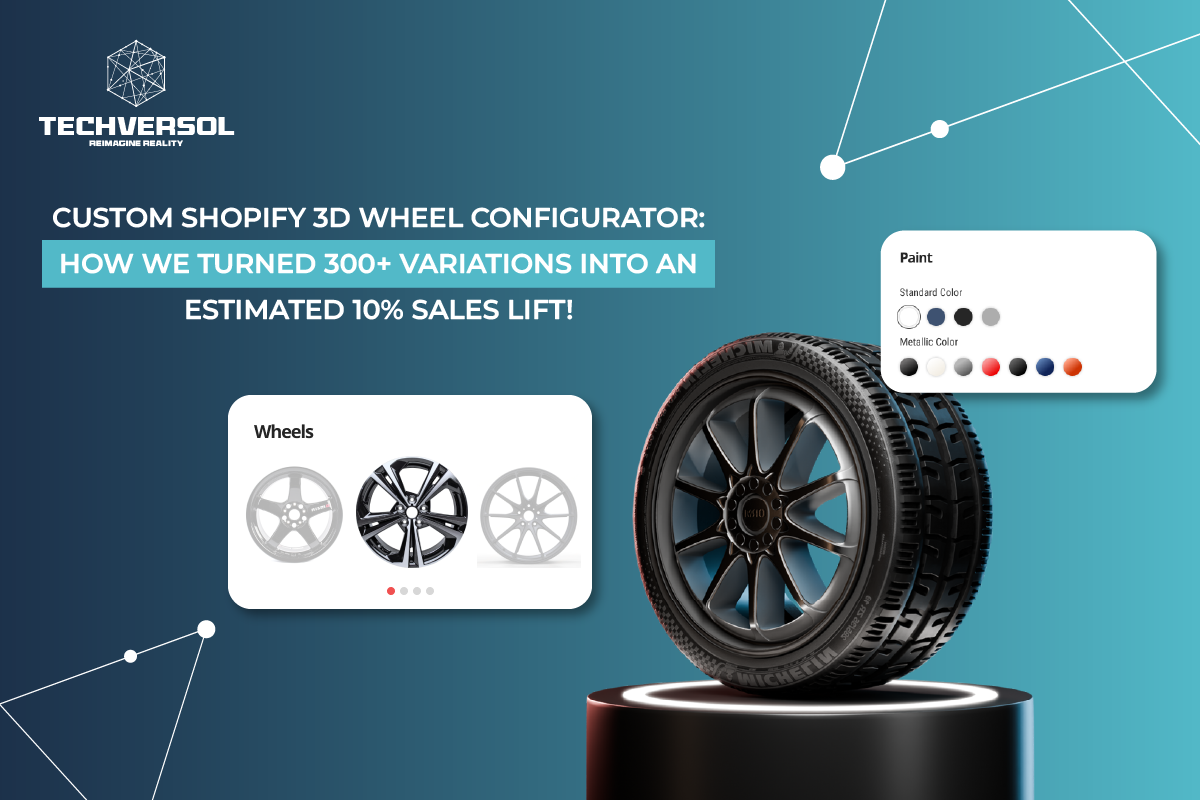
Any shopper who configures a product in 3D colorway, trim, dimension, and finish buys more and returns less. A 3D product configurator embedded in a Shopify or headless storefront is the most reliable reentry point in metaverse development, as it attaches directly to the revenue.
It’s the cheapest way to prove the thesis before anyone commits to a personal world. Reported figures can lift, as it varies by category, except (inserting verified conversion and lifting from own pilot data) instead of trusting a vendor benchmark.
Enterprise Training and Simulation
Low-frequency tasks with high consequences are ideal candidates: confined space, equipment lockout, complex assembly, emergency response. The economics are very simple: if the training session requires stopping production, a simulation can pay for itself in a handful of runs.
Virtual Showrooms and Real Estate
Assets that are expensive to transport or have not yet been built machinery, unbuilt, yacht, and development belong in a persistent virtual environment where a global sales team can walk a buyer through them at 9 a.m. in any time zone.
Operations and the Digital Twin
Most mature metaverse development solutions in the industrial setting are the twins: a spatial model of a plant, live, fed by telemetry, where operators can simulate, forecast, and inspect. The metaverse part is the interface. The value has to be the data.
Want The Cheapest Way To Test Spatial Commerce?
A 3D product configurator embedded in your Shopify or headless storefront attaches directly to revenue and our engine team, not a broker, builds it. Bring your product; we’ll scope the pilot.
Metaverse Game Development: Where the Budget Actually Goes
Buyers can ask for a metaverse game, which can mean one of two things.
Gamified brand environment: a branded space with rewards, a light interaction loop, and social features. Timeline can be measured in months; the hard part is retention and not just technology.
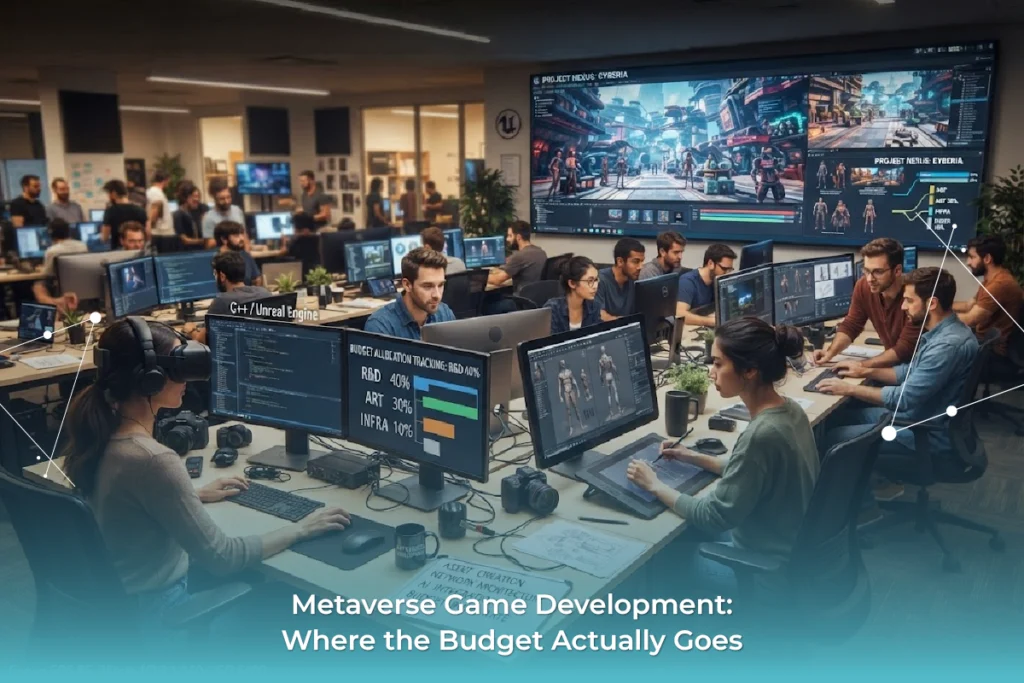
Actual multiplayer games: matchmaking, persistent state, netcode, economy balancing, anti-cheat, and live ops, etc. Timeline is measured in quarters. The hard part has to be everything.
Metaverse game development is quoted at the first price for the second scope, which is why projects end up abandoned at 60% completion. These are the engineering questions to ask before a vendor quotes:
- Is the state authoritative on the server, or are you trusting the client?
- What is the plan for asset streaming on the mid-range mobile device?
- What is the concurrent-user target, and what happens at 2x?
- Who owns the live ops after launch, and what is the content cadence?
A serious game development team can ask these in the first call; a studio that leads with concept art asks them after the budget is gone.
What a Metaverse Development Company Costs and What Drives the Number
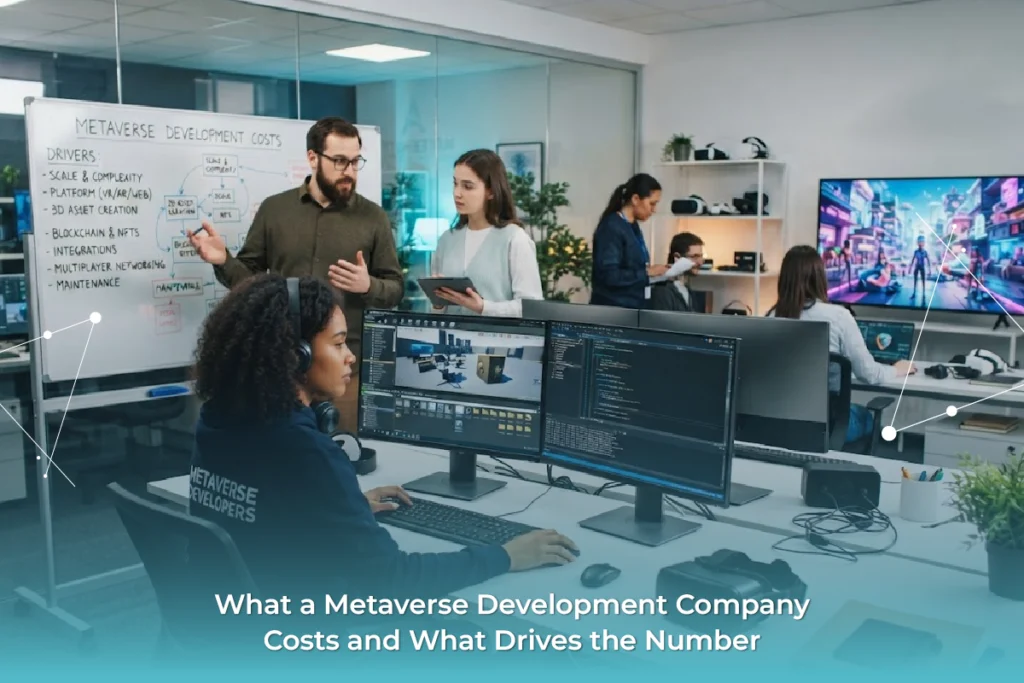
Any Metaverse Development Company that quotes a flat number before scoping is mostly guessing; these are the variables that move the estimate more than anything else.
- Asset count and fidelity: twenty hero assets at photoreal quality cost more than a hundred stylized ones.
- Multiplayer and single-user: adding real-time multiplayer isn’t a feature; it’s a different architecture.
- Target Device: the browser-based WebGL, on mid-range mobile, is the hardest constraint in the industry and one buyers most often add late.
- Integrations: every enterprise system in the scope adds discovery, QA surface, and authentication.
- Persistence and Live Ops: a world that can run after launch needs a team that runs after launch.
Why Techversol
Techversol builds real-time 3D immersive systems and end-to-end engine work in Unity, spatial, Unreal, photoreal 3D rendering, and the backend integration work that can run experiences in a system of record.
We build configurators that write to the PIM, training simulations that report to the LMS, and digital twin interfaces that read live telemetry.
In-House Engine Team: Unity and Unreal engineers on staff, not brokered; a technical lead is available on every shopping call.
Fixed-Scope Phase One: a defined discovery and prototype phase with a working artefact at the end of the deck.
Shopify headless, storefront, ERP, CRM pipelines. The unglamorous half that determines the ROI.