...

Custom Shopify 3D Wheel Configurator

Turning complex custom wheel configuration into an interactive, quote-ready, add-to-cart buying experience.

Executive Impact

A premium custom automotive wheel brand launched a fully responsive 3D configurator supporting 300+ product variations, dynamic pricing, finish customization, and Shopify add-to-cart integration. The launch contributed to an estimated 10% increase in sales and lead generation within the first month
PROJECT SNAPSHOT

Prepared for portfolio, sales enablement, and marketing use. Client name intentionally anonymized.

Executive Summary

A premium automotive wheel brand needed a better way for customers to explore and purchase highly customizable wheel products online. The product catalog included dynamic sizing, colors, finishes, hardware, beadlocks, center caps, and multiple price-driven choices. Static product images and standard Shopify product pages could not fully communicate the visual complexity or the pricing impact of each configuration.

Techversol designed and developed a custom 3D wheel configurator inside a Shopify website using Next.js, Three.js, a custom Shopify app, and custom-built 3D wheel assets. The car wheel configurator allows customers to customize wheel parts in real time, see finish and color changes instantly, understand pricing before checkout, and add the configured product to cart with all selections captured.

Positioning Statement

Techversol helped a premium custom wheel brand transform product browsing into an interactive 3D configuration and quote-generation experience.
Client Context

The client is a premium automotive wheel brand. serving customers who expect a high level of customization, visual accuracy, and confidence before purchasing. Customers are not only choosing a wheel model; they are choosing a personalized combination of parts, finishes, colors, sizes, and add-ons.

Why This Product Category Needed Real-Time Wheel Visualization

  • A custom wheel has multiple visual zones, including the center, inner rim, outer rim, and cap.
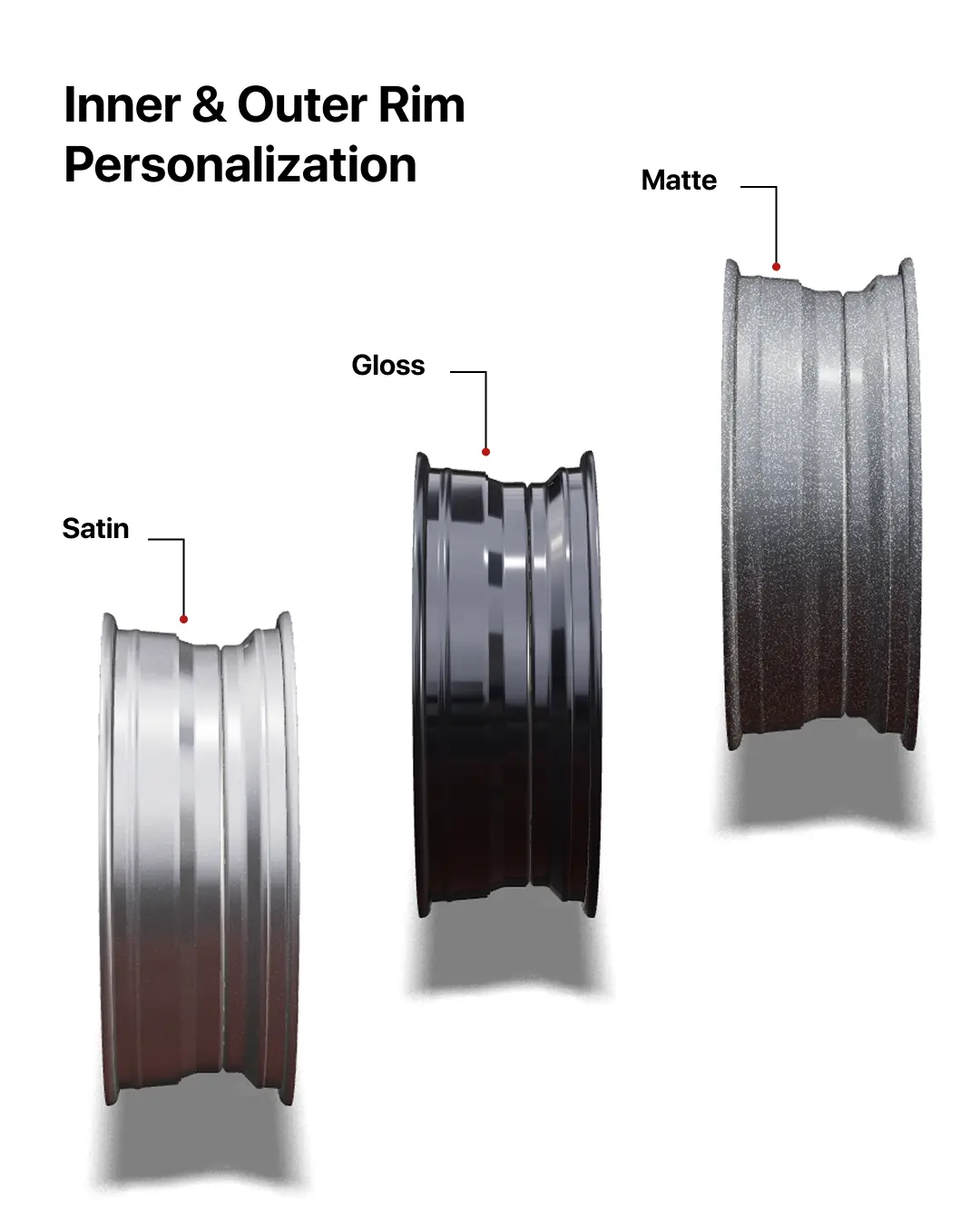
  • Finish behavior matters because gloss, matte, satin, metallic, transparent, and textured looks can change the final impression of the product.
  • Customers need to see combinations before committing to a premium purchase.
  • Sales teams need accurate configuration data to reduce manual clarification and speed up quote/order processing.

The Challenge

The client offered a large and complex product catalog with more than 300 wheel variations. Each product could involve different 3D geometry, sizing options, finishes, colors, texture behavior, hardware, beadlocks, caps, and upcharges. A standard product page was not enough to show the customer what the final product would look like or how each choice affected the order.

Business Problems

  • Customers had to imagine finish and color combinations from static references.
  • Sales conversations required extra back-and-forth to confirm visual and price-driven choices.
  • Complex customization made the buying journey slower and less confident.
  • The brand needed a premium digital experience that matched the quality of the product.
  • The Shopify purchase flow needed to receive configuration data accurately, not just display visuals.

Technical Problems

  • Large variation count across models, sizes, finishes, and textures.
  • Different UV layouts and material behavior across custom 3D wheel assets.
  • Need for realistic real-time finish previews inside a browser.
  • Need for smooth desktop and mobile performance.
  • Need to connect visual selections with Shopify pricing, add-ons, and add-to-cart data.

Project Goals

  1. Create a premium real-time 3D product configuration experience for custom wheels.
  2. Support 300+ product variations with custom models, dynamic sizing, colors, and textures.
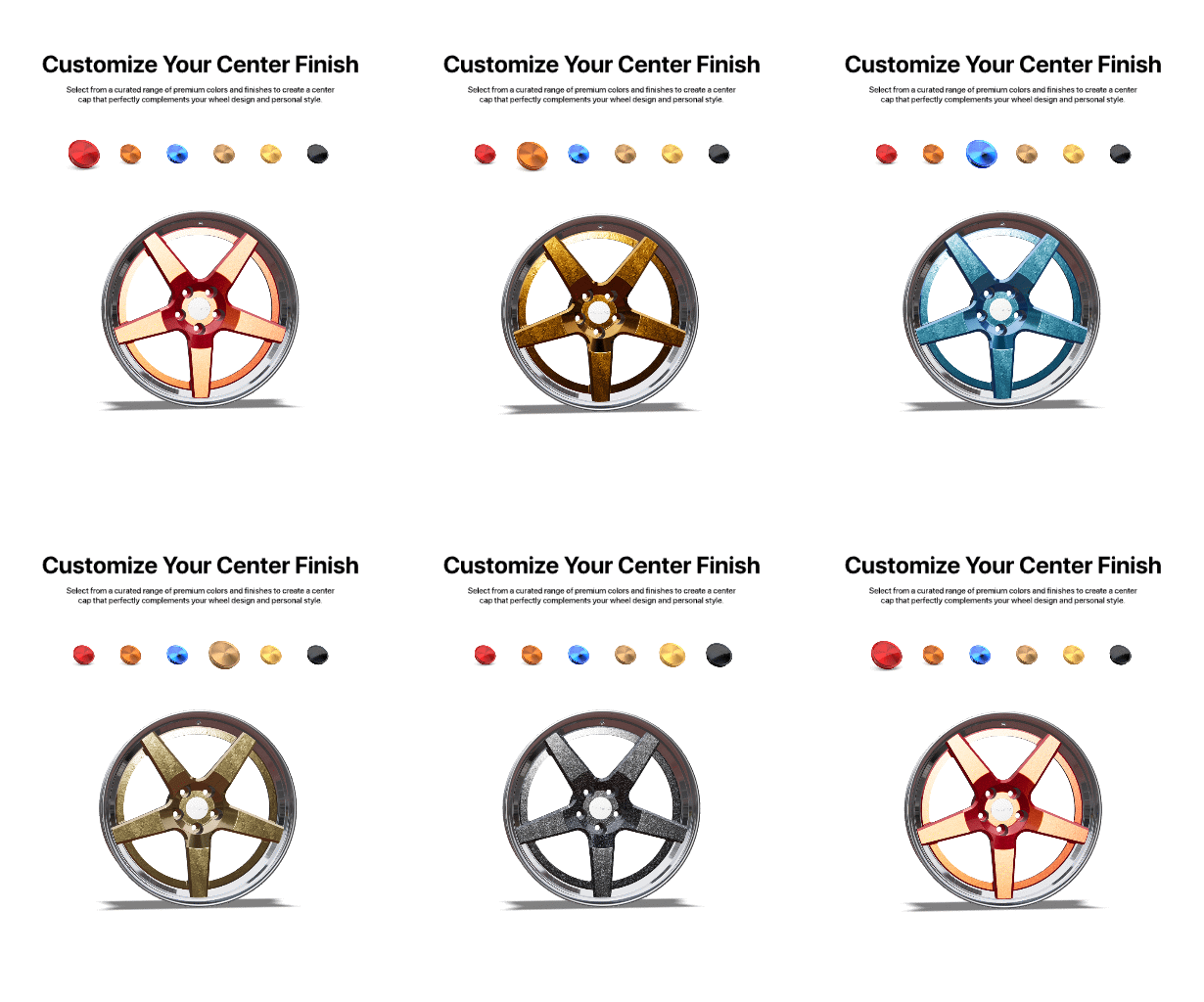
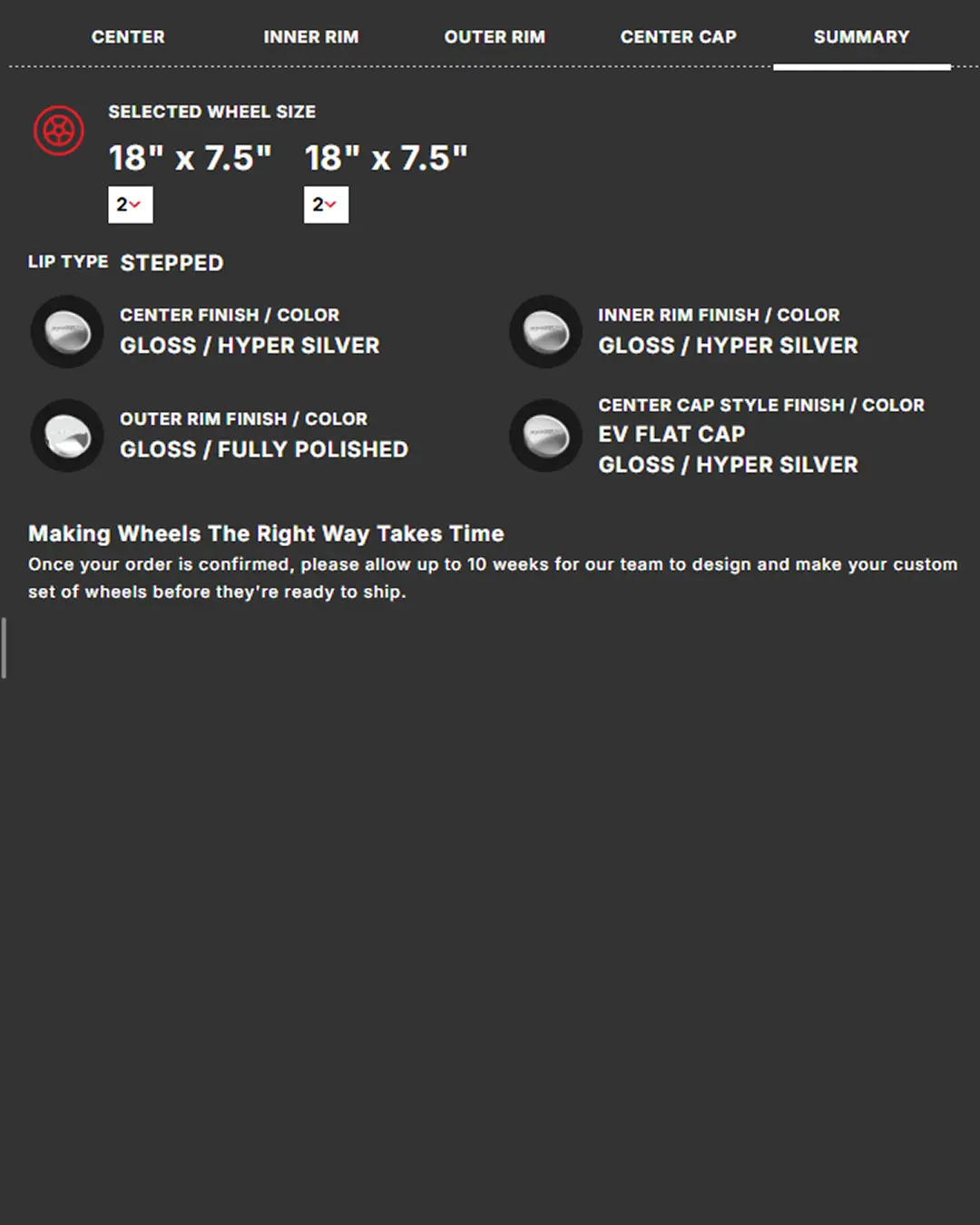
  3. Allow users to customize wheel parts separately, including center, inner rim, outer rim, and center cap.
  4. Support finish categories such as gloss, matte, and satin with proper material behavior.
  5. Calculate and display pricing based on selectable fields such as colors, hardware, beadlocks, caps, and other add-ons.
  6. Capture all important configuration details for customers, sales teams, quote handling, and checkout.
  7. Build the system inside Shopify through a custom app without requiring a separate admin panel.
  8. Deliver a fully responsive experience across desktop and mobile devices.

The Solution

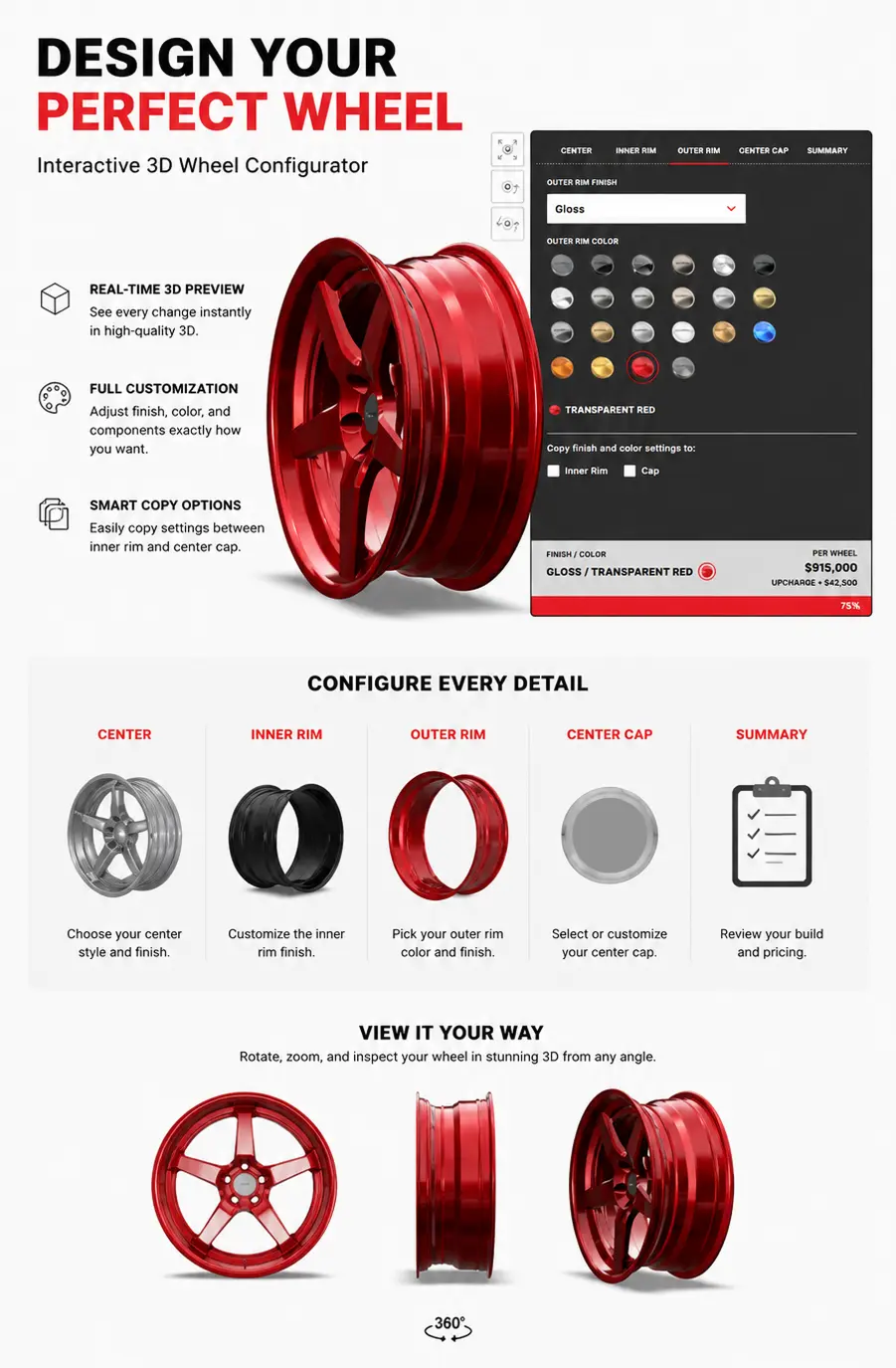
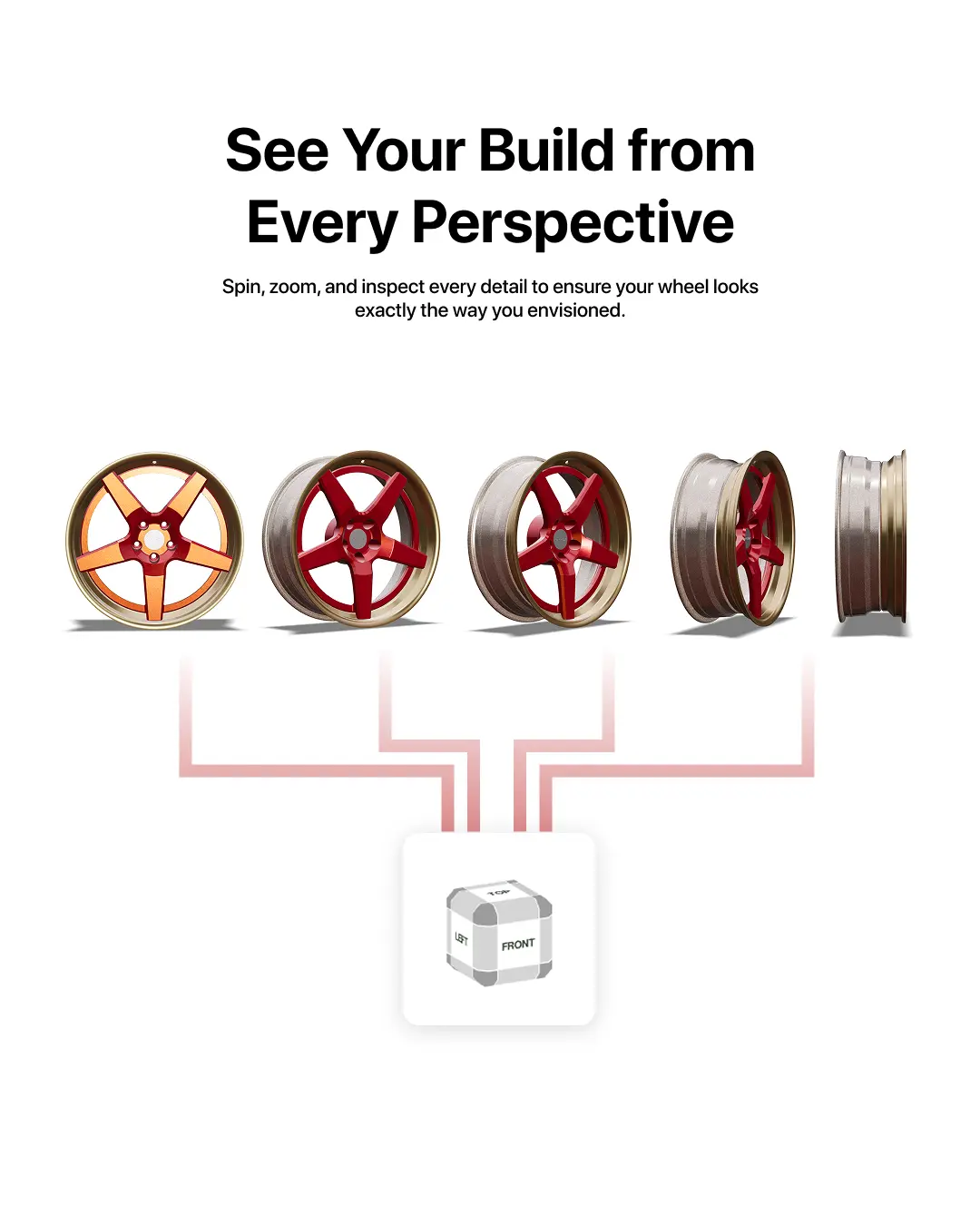
Techversol built a custom Shopify-based 3D wheel configurator that converts a complex product catalog into an interactive buying experience. The configurator lets customers rotate and inspect the product, change finishes and colors by wheel part, view pricing impact, and proceed to cart with the selected configuration captured.

Core Solution

A custom Shopify app embeds a responsive Next.js and Three.js configurator into the product experience, connecting 3D visualization, dynamic product logic, price-driven options, and Shopify add-to-cart functionality.

Configurator Experience

Customer Journey

Step

Stage

Purpose

Key Features Delivered

Real-Time 3D Visualization

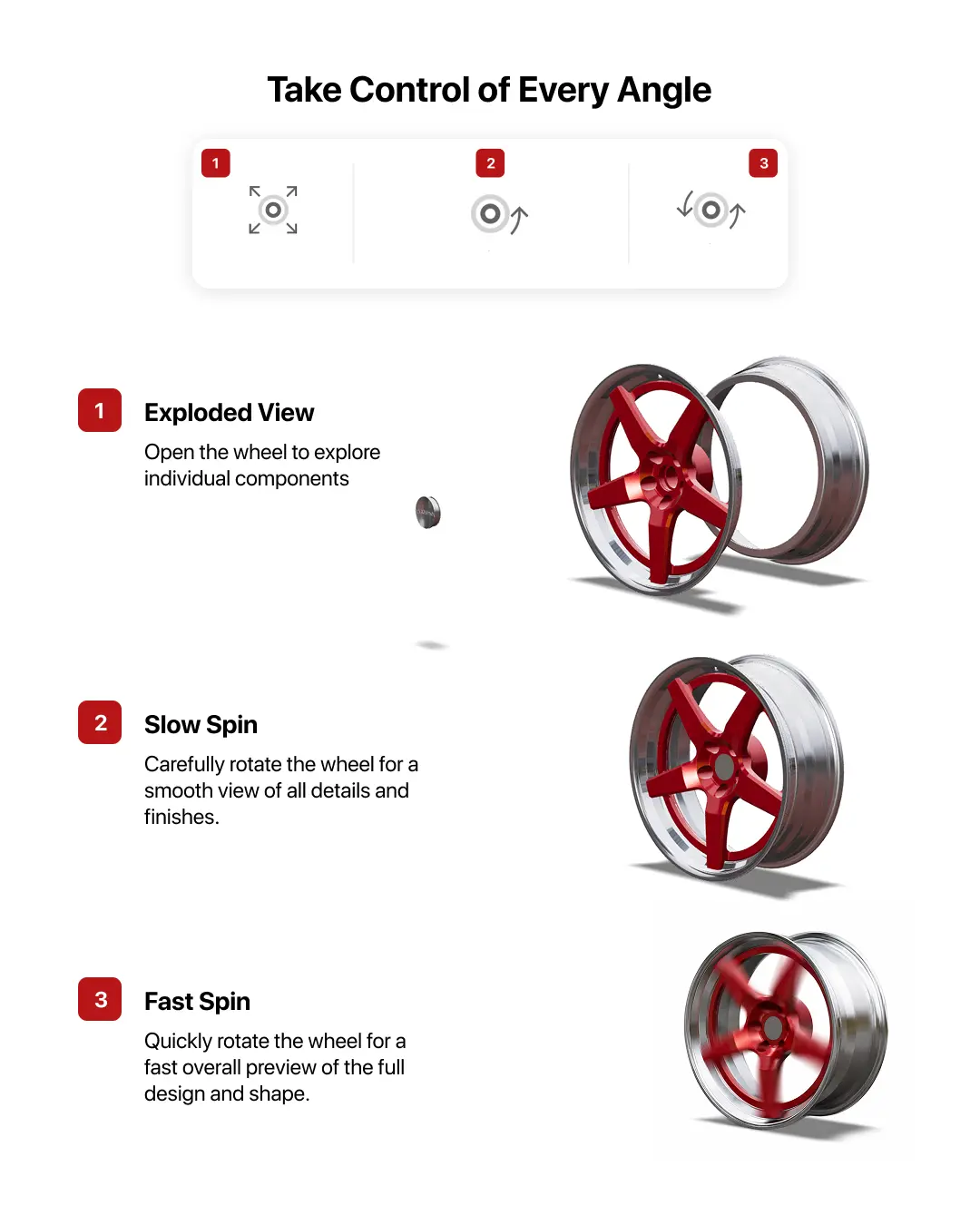
Customers can inspect and customize the wheel in an interactive 3D environment instead of relying only on static product imagery.

Part-by-Part Customization

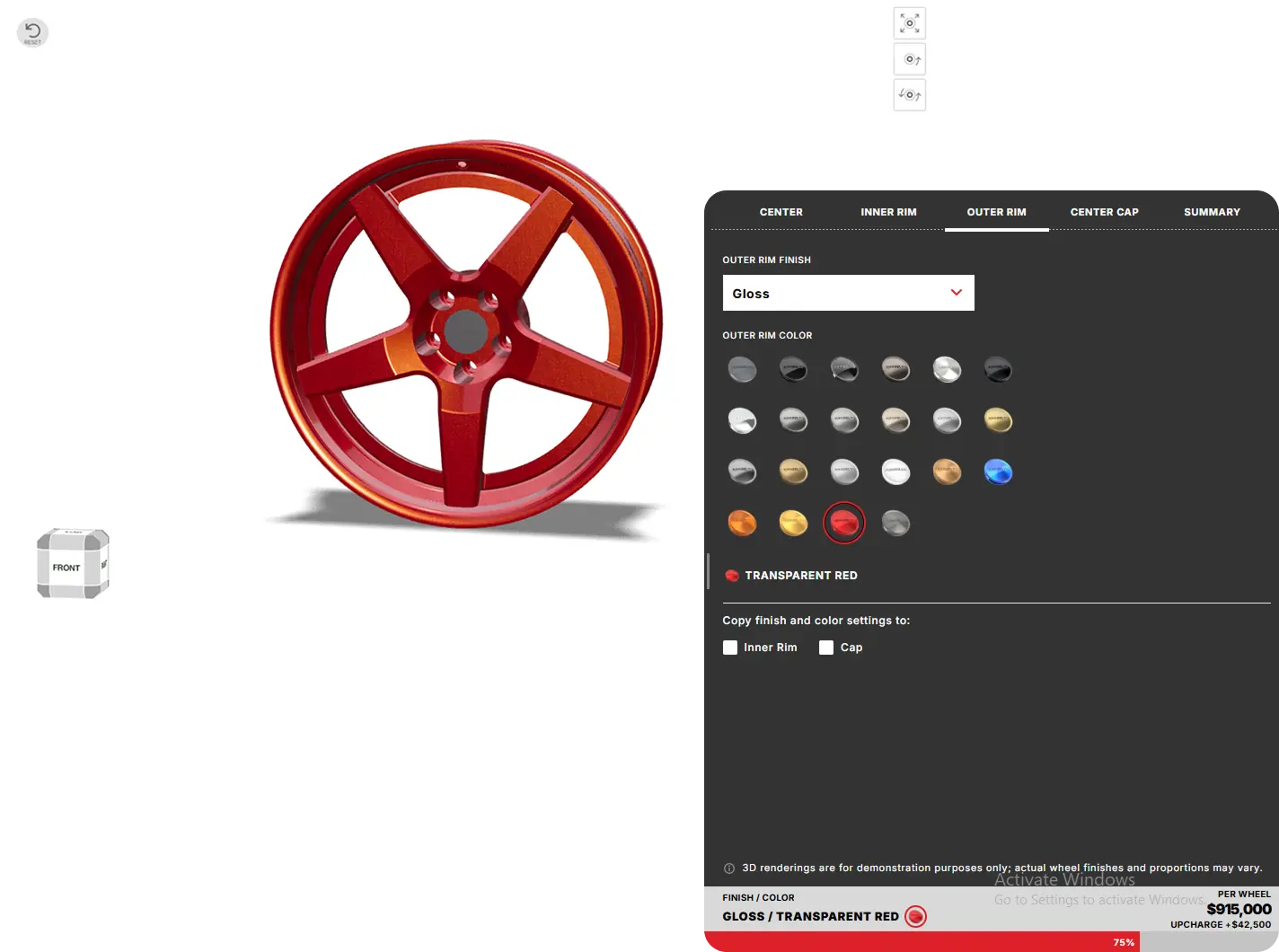
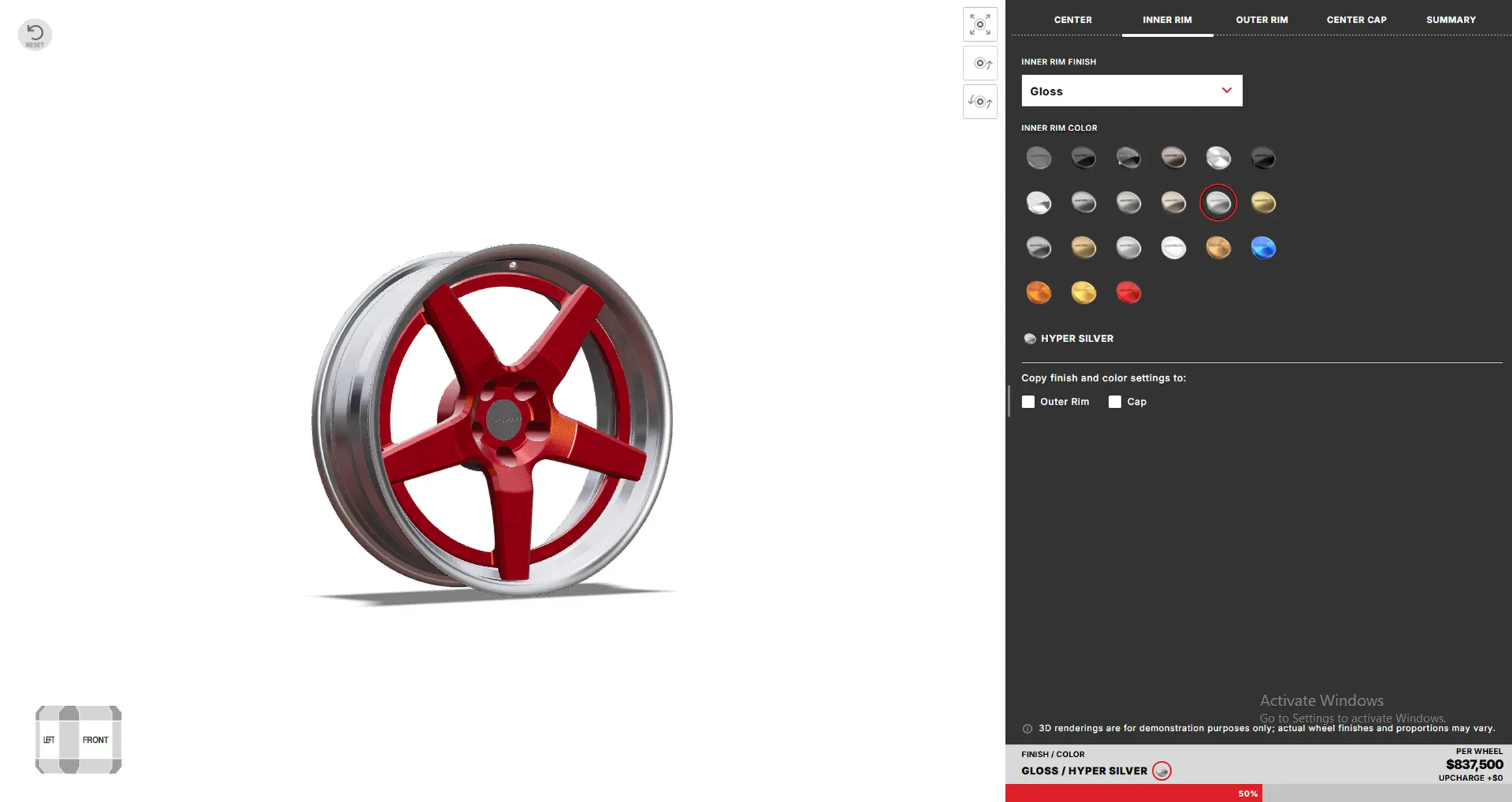
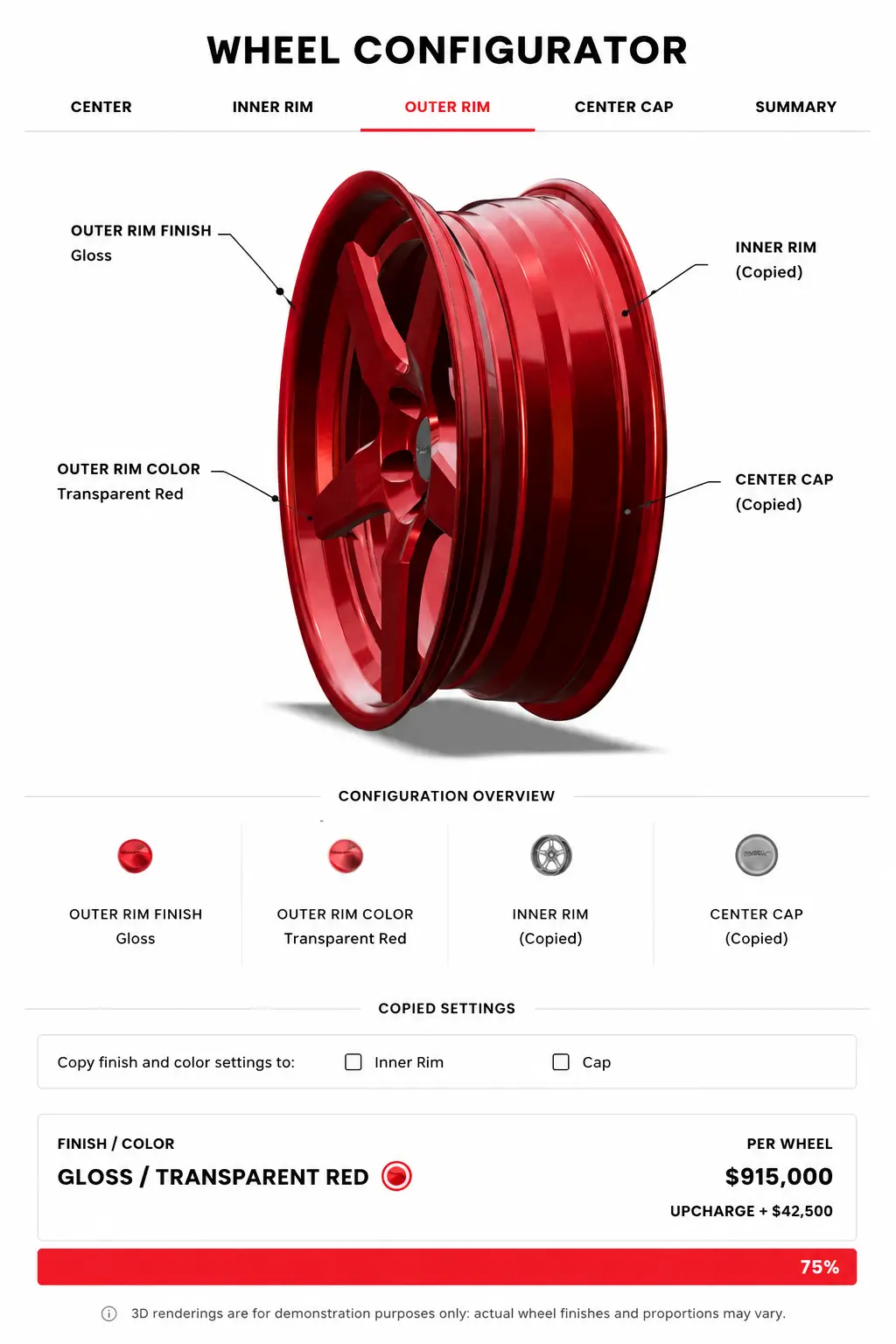
Separate controls allow configuration of center, inner rim, outer rim, center cap, and summary selections.

Finish and Color Logic

Gloss, matte, satin, and multiple color/texture options are handled with dynamic material behavior.

Dynamic Product Variations

The system supports 300+ wheel variations with custom 3D assets, sizing, colors, textures, and product-specific rules.

Price-Driven Options

Selectable options such as colors, hardware, beadlocks, caps, and add-ons are connected to pricing.

Shopify Add-to-Cart

Final configurations are sent into Shopify cart with the selected product data and pricing.

Sales-Ready Data Capture

Configuration selections are captured so the sales team and customer can clearly understand the requested product.

Responsive UI

The configurator works across desktop and mobile, allowing customers to configure wheels from multiple device types.

Technical Implementation

The project combined web development, Shopify integration, real-time 3D rendering, material handling, and custom 3D production. The goal was not only to render a wheel, but to make the visual state, pricing state, and Shopify cart state work together as one experience.

Frontend

Next.js

3D Engine

Three.js

E-commerce Platform

Shopify

Product Logic

Dynamic variation loading, pricing rules, add-to-cart configuration data

Integration Layer

Custom Shopify App

3D Production

Custom 3D wheel models created by Techversol

Materials

Custom colors, finishes, textures, UV-based material handling

Responsive Experience

Desktop and mobile optimized interface

3D Asset and Material Pipeline

  • Techversol created and prepared the required 3D wheel assets.
  • Models were optimized for browser-based rendering while preserving a premium look.
  • Different UVs and texture behaviors were handled to support product-specific finishes.
  • Materials were configured to make gloss, matte, satin, metallic, transparent, and custom colors look convincing in real time.
  • The asset pipeline was coordinated directly with the developer so visual and data behavior stayed aligned.

Major Challenges and How Techversol Solved Them

Challenge

Why It Was Difficult

Techversol Approach

Results

After launch, the Shopify 3D Wheel Builder helped the brand transform a static product browsing flow into an interactive buying journey. Customers could now see what they were building, understand pricing, and submit clearer purchase-ready configurations.

Reported First-Month Impact

The client reported an estimated 10% increase in sales and lead generation within the first month after launch.
Reported First-Month Impact

The client reported an estimated 10% increase in sales and lead generation within the first month after launch.

Business Outcomes

  • Improved customer engagement with premium wheel products.
  • Better visualization of finish, color, and part combinations.
  • Higher confidence before checkout and reduced uncertainty around custom orders.
  • More useful configuration data for the sales team.
  • Improved lead quality because customer preferences were captured directly from the configurator.
  • Stronger marketing value through an interactive product experience.
  • Fully responsive mobile experience for customers browsing from phones.

Why It Improved Sales and Lead Generation

The 3D car wheel configurator works as both a sales tool and a marketing tool. It keeps users engaged longer, lets them experiment with multiple combinations, and reduces the uncertainty that usually exists in custom automotive purchases. Because price-driven fields are captured in the configuration, the sales team can follow up with clearer context and less manual discovery.

Timeline and Team

DELIVERY SNAPSHOT

3D Asset and Material Pipeline

  • Techversol created and prepared the required 3D wheel assets.
  • Models were optimized for browser-based rendering while preserving a premium look.
  • Different UVs and texture behaviors were handled to support product-specific finishes.
  • Materials were configured to make gloss, matte, satin, metallic, transparent, and custom colors look convincing in real time.
  • The asset pipeline was coordinated directly with the developer so visual and data behavior stayed aligned.

Technology Approach

The configurator was developed as an enterprise desktop application using a real-time 3D foundation suitable for complex interactive product systems.

Unity / real-time 3D application architecture

C#

Local database support

JSON-driven data structures

Backend/API-ready architecture

Challenges Overcome

Building a custom product configurator furniture at this scope within 8 weeks required solving several non-trivial technical and design challenges:

  • Compatibility Logic: Product rule complexity: With ~30 configurable products, each with multiple finish and accessory options, defining and enforcing valid combinations required careful constraint architecture to prevent invalid configurations without limiting the customer experience.
  • Performance at Scale: Real-time 3D performance: Maintaining smooth browser-based rendering across a wide range of devices, including mid-range laptops, while loading multiple detailed product models simultaneously required rigorous scene optimization and asset management.
  • Commerce Integration: Shopify integration depth: Mapping the configurator’s product data model to the client’s Shopify product structure, especially for variant combinations and pricing logic, required custom middleware beyond what standard Shopify app frameworks support.
  • Non-Disruptive Lead Flow: Lead capture UX: Embedding lead collection into the configuration journey without disrupting the user experience required multiple rounds of UX prototyping to find the right moment, format, and friction level for the capture form.

Business Impact

For high-value custom products, the buying decision depends heavily on confidence. The best wheel configurator gave customers a practical way to build, compare, and understand their wheel configuration before moving forward. This reduced friction in the sales process and turned customization into a visible marketing advantage.

Impact Areas

  • Customer Experience: A more premium, interactive buying journey inside Shopify.
  • Sales Enablement: Clearer configuration details for quotes, follow-up, and order processing.
  • Marketing: A visual product experience that encourages exploration and social-style engagement.
  • E-commerce: Configured products can move directly into cart with pricing and selections attached.
  • Operations: Less ambiguity around what the customer selected and what must be fulfilled.

Future Roadmap Opportunities

The 3D furniture configurator well-positioned for the following enhancements, which would further close the gap with best-in-class industry tools:


  • Augmented Reality (AR) view, allow mobile users to place configured products in their actual garage using device camera, a capability now standard among leading furniture configurator platforms.
  • Real-time pricing display, show a live price estimate that updates as the user adds and customizes products, reducing quote turnaround time and setting clearer expectations.
  • Save & share configuration, enable customers to save their layout and return to it later, or share a configuration link with a partner or contractor for input before committing.
  • Analytics dashboard, capture heatmap-style data on which products are most configured, which combinations are most popular, and where users drop off in the configuration journey.
  • CRM auto-sync, push structured lead and configuration data directly into the client’s CRM at the moment of quote submission, eliminating manual data entry entirely.

Final Case Study Summary

Techversol built a custom Shopify-based 3D wheel configurator for a premium automotive wheel brand. The solution allows customers to customize wheel parts, finishes, colors, sizing, hardware, beadlocks, and caps in real time through interactive 3D visualization. Built with Next.js, Three.js, a custom Shopify app, and custom-made 3D assets, the configurator supports more than 300 product variations and works across desktop and mobile devices.

The project improved customer engagement, simplified configuration handling for the sales team, and contributed to an estimated 10% increase in sales and lead generation within the first month after launch.
Avail Your Free Figma Prototype Today!

Group 1484580188 (2)

Claim Your 50% Off on a Custom 3D Configurator Today!

Group 1484580189 (1)
Seraphinite AcceleratorOptimized by Seraphinite Accelerator
Turns on site high speed to be attractive for people and search engines.