A 3D product configurator is not just an electronic program—It’s an experience where users can design, visualize, and customize products in real time. The question is: where do you implement it to have the greatest impact?
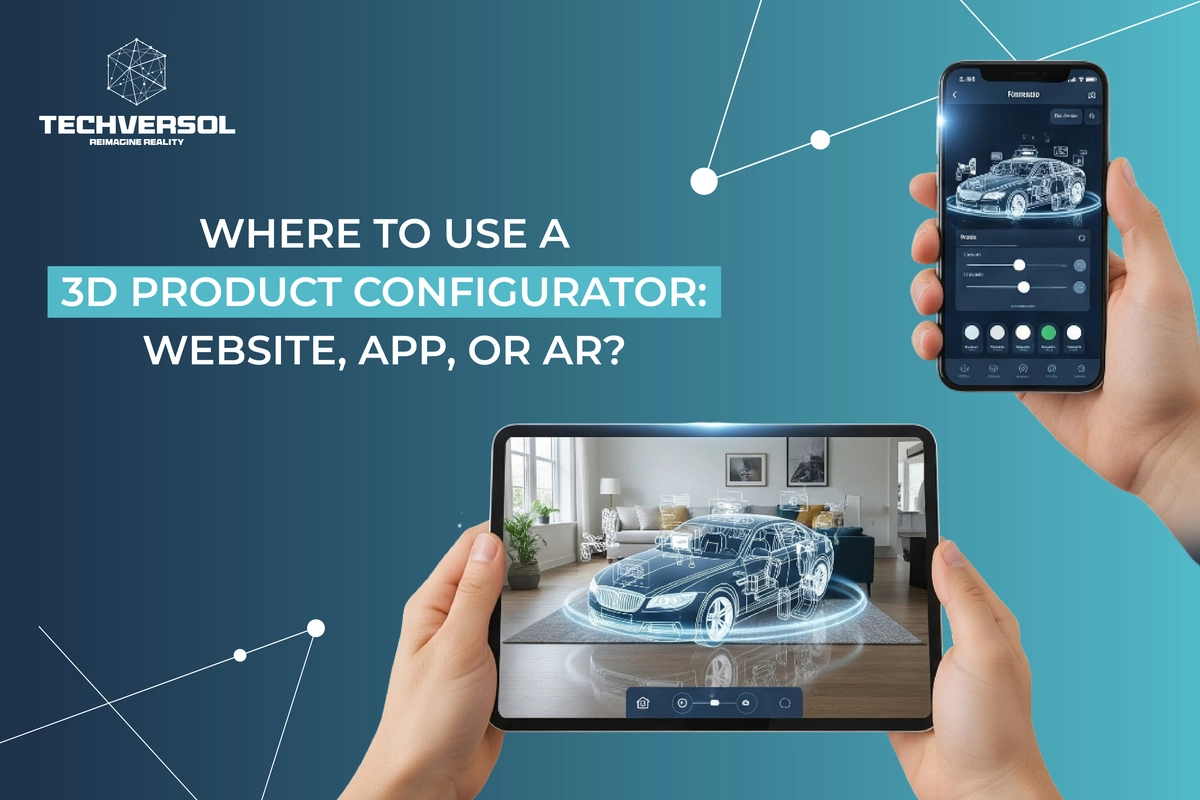
For some, hosting a 3D configurator on their website is most appropriate to entice online consumers. Others prefer to include it within a mobile application for easy access and modification while on-the-move. And for brands who desire to stand out, AR-based configurators enable users to experience an immersive “try-before-you-buy” experience.
In this blog, we’ll explore each option, share the benefits of a product configurator, and highlight how Techversol helps companies build custom 3D solutions that engage customers and drive sales.
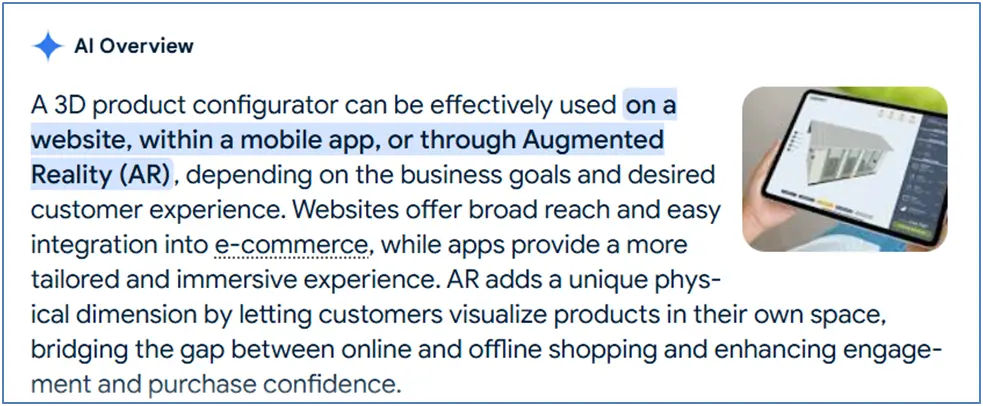
What is a 3D Product Configurator?
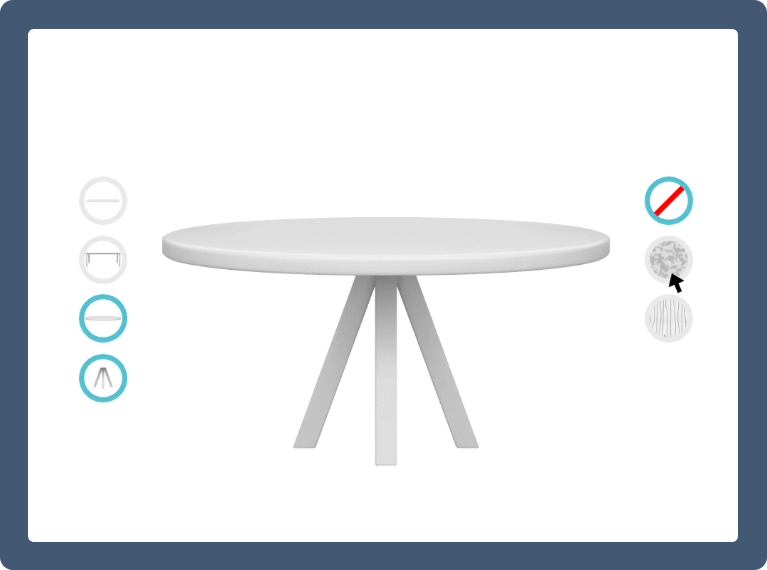
A 3D product configurator is a virtual-based application used by the customers to design, personalize and view products on-demand. Instead of having to imagine the final look of a product, the customer is able to turn it, change the color, its features and see the end result on the spot.
In furniture, fashion, cars and electronics, companies use 3D configurators as an interface that allows customers a holistic, modern and individualized shopping experience, and is interactive. It increases customers’ trust not only but also allows brands to establish sales and reduce returns.
How Does a 3D Product Configurator Work?
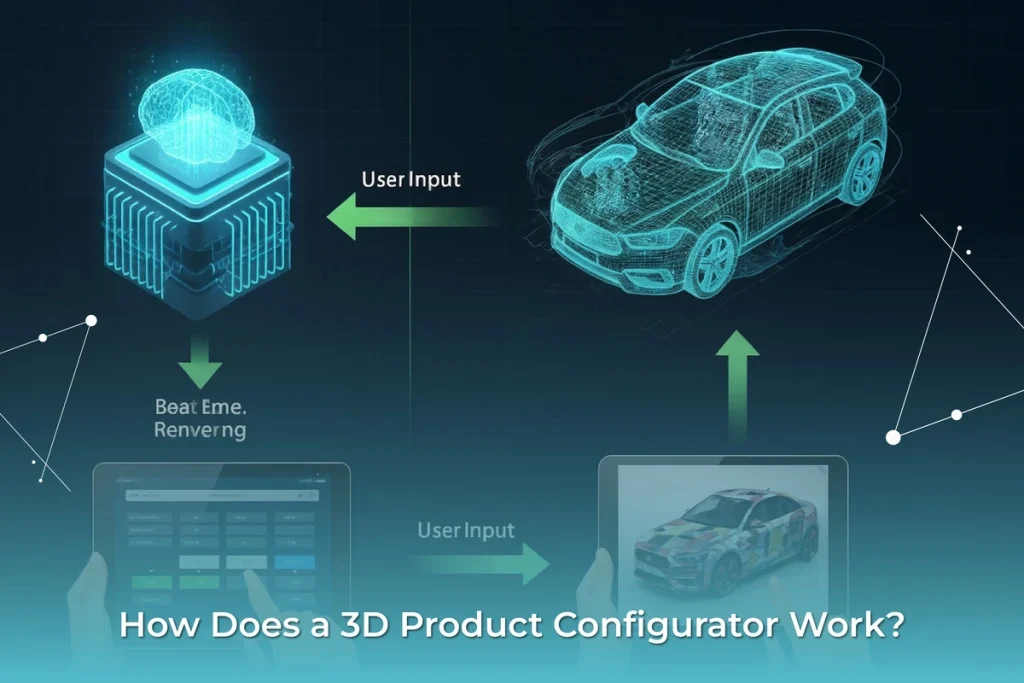
The 3D product configurator functionality is achieved through a combination of superior 3D modeling and rendering techniques and real-time interactive capability to create a customizable online interpretation of a product. This is the working of how it functions step by step:
3D Model Creation
In the first step, designers develop a sophisticated 3D model of the product on special computer software. All possible variations are incorporated to this model whereby the variations can be in sizes, materials, textures, and colors.
Real-Time Rendering
The configurator employs the services of rendering engines, which represent the product by high-quality images. The customers are able to rotate, zoom and look at the goods in every dimension as though the merchandise is in the customers face.
Customization Options
Using an interface, users make their choices (colour, material, add-ons, styles). Their customized product is accurately previewed because each change is immediately reflected on the 3D model.
Customization Options
Using an interface, users make their choices (colour, material, add-ons, styles). Their customized product is accurately previewed because each change is immediately reflected on the 3D model.
Integration with E-Commerce
The configurator links with an online shop or application of a company. After, the customer settles down, the tool refreshes pricing, availability, and specification.
Integration with E-Commerce
The configurator links with an online shop or application of a company. After, the customer settles down, the tool refreshes pricing, availability, and specification.
AR and VR Support
Use of Augmented Reality (AR) and Virtual Reality (VR) is being added to the experience by many modern configurators. This allows them to do things such as virtually place products in their space (furniture in a living room) or allow them to interact with them in a completely immersive environment.
Put simply, a 3D product configurator is the linkage between fantasy and reality. It will make sure that buyers will not buy a product blindly- they will experience a product before they buy it, which makes shopping more exciting and trustworthy. Brands can partner with Techversol to create custom 3D product configurators that deliver interactive, scalable, and high-quality experiences.

Techversol Can Help You Build A 3D Product Configurator?
Why Use a 3D Product Configurator?
Watch the last thing you ever purchased online, you were not 100 percent certain how it would have appeared or worn in real-life, right? That is where the 3D product configurator comes into operation. It does not need to rely on flat photos: customers can engage with items in real-time and tailor them to their liking, and preview the result before making a purchase. This not only creates a feeling of confidence but it also renders shopping very exciting.
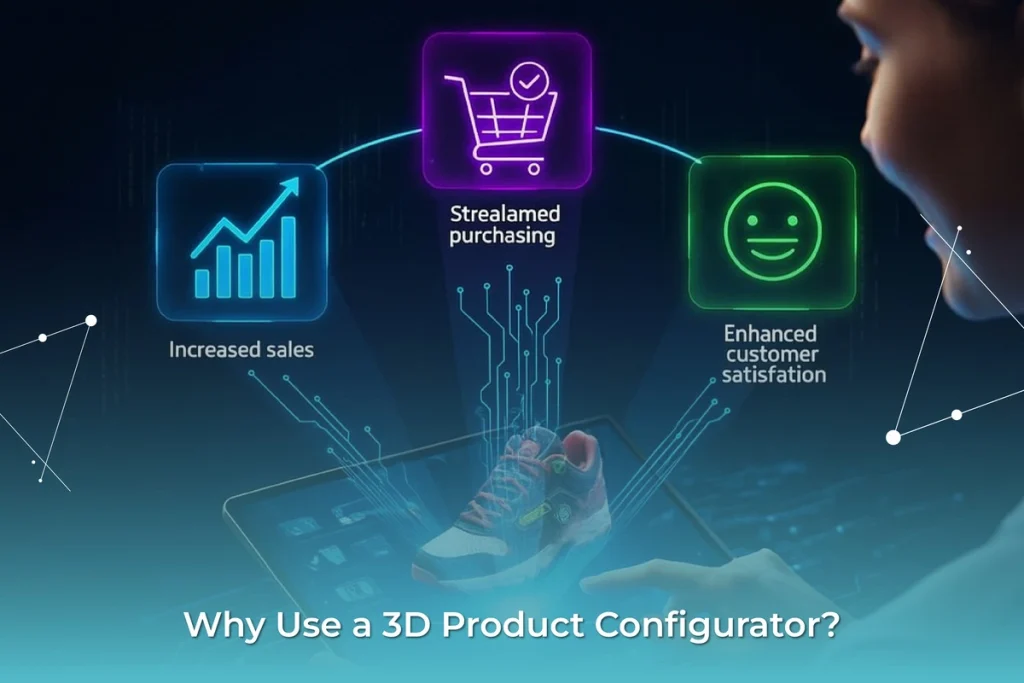
Better Customer Engagement
Browsing through the fixated photographs is a bore sooner than later. Just think what it must be like to be able to swivel a chair on its axis, or magnify the finings of its material. That is the interactive experience a 3D configurator offers your customers. It makes them spend more time in the shop and reduce the possibility of forgetting it.
Higher Conversion Rates
The more confident customers are the faster they make the decision. When a person is able to see the specific shade, size and or feature that they desire, doubts do not arise. This assurance urges them to click-to-checkout without any hesitation directly increasing your sales.
Reduced Returns
Ever ordered something online only to realize it looks nothing like the pictures? That’s why returns happen. With a 3D configurator, customers know exactly what they’re getting. This realistic preview reduces mismatched expectations and saves businesses the headache of frequent returns.
Competitive Edge
In the present-day eCommerce environment, where the number of competitors is high, it is critical to present something unique. Whereas competitors have flat images of their products, you offer an immersive experience to the buyer.
Increased Customer Satisfaction
Personalization leaves an individual with the feeling that they are special. When a consumer personalizes a good-design, color schemes, or details- he or she develops an attachment to it. Such a feeling of ownership does not only enhance satisfaction but also makes them more likely to play again.
How to Build a 3D Product Configurator
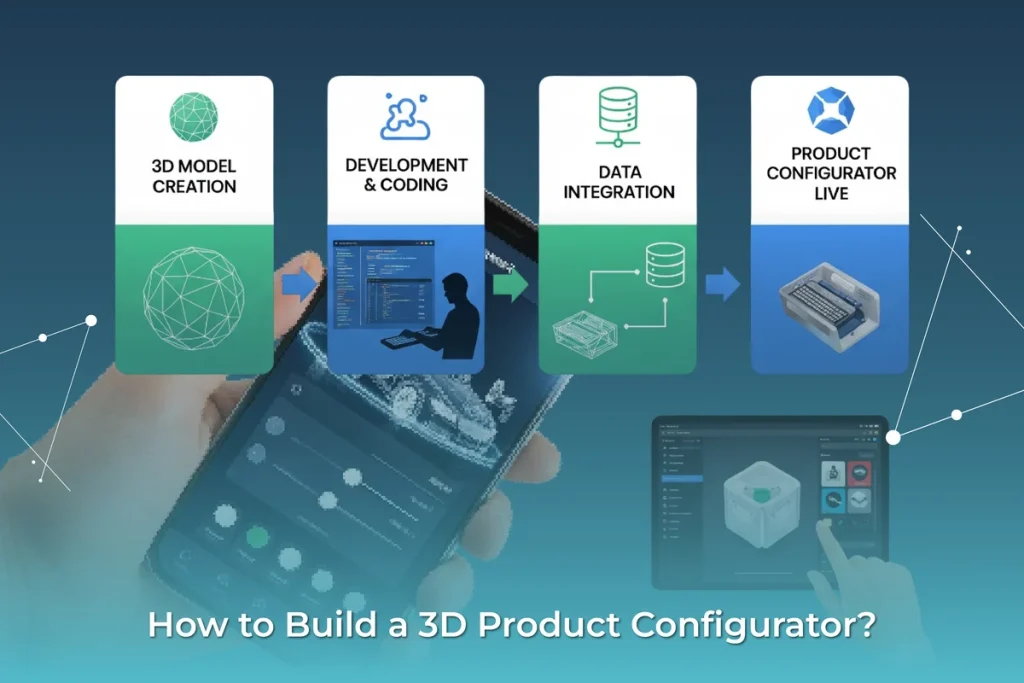
The creation of a 3D product configurator has to strike a delicate balance between creativity, technology, and strategy. Here is an apparent step by step process:
Define Goals & Audience
To start with, you must recognize your goals, What are those products that will be customized and who is the intended audience. A configurator to a men’s clothing shopper would be very different when compared to an industrial equipment user’s configurator.
Create 3D Models
Create the 3D models of high quality with whatever tool such as Blender, Maya, or CAD. The models are to be realistic, scalable, and lightweight, that is they can load fast without there being much sacrifice in detail.
Choose a Platform
Make the decision of where the configurator is going to reside, on a web site, mobile application, or augmented reality experience. The platforms demand different types of optimizing processes and interaction design.
Integrate Features
Add personalization solutions such as colors, textures, materials, sizes and new prices. Real time rendering will make sure that customers experience the satisfaction of every modification as they occur, and the virtual shopping experience becomes smooth.
Test & Optimize
Check functionality across browsers and devices.Ensure minimal loading time and ease of navigation and responsiveness such that everyone can use the tool.
Launch & Update
After going live, start gathering feedback, and continue to add new products, features, or integrations. Constant updates make the configurator exciting and successful.
At this point, companies may collaborate with the professionals like Techversol, who are specialized in development of interactive 3D tools, custom product configurators, and AR/VR experiences. Brands can design gorgeous and scalable configurators based on their knowledge base and UX skills and increase viewer engagement and conversion rates.
Ready To Create A Configurator That Reflects Every Customer Choice?
Types of 3D Product Configurators
Each of the businesses does not have to use the same type of configurator. There is a variety of the types of 3D product configurator tools you may choose depending on where your customers do their shopping and how they prefer exploring the products. Some are specific to your site, others to mobile apps, and the most sophisticated bring products into the real world via augmented reality. Here is a better look:
Online 3D Product Configurator for Websites
They are the most usual kind of a configurator 3D as it is directly embedded on eCommerce stores. They enable customers to tailor products during real time—altering the colors, sizes, or materials- and place them in the cart immediately. To name just one example, a furnishing store can allow customers to preview a sofa in various materials on the Web page.
Mobile App 3D Configurator
Brands with branded apps often support configurators to make the shopping experience more streamlined to a brand- specific app. Customers are also able to rotate, zoom and design on items easily. This comes in handy particularly in those brands that aim at younger, mobile first consumers, who shop more through apps compared to browsers.
AR 3D Product Configurator
AR (Augmented Reality) makes the experience a notch higher by appropriating the virtual products to the actual world. Smartphone cameras allow consumers to (literally) put objects in their houses and even to virtually wear clothing. As an example, customers are able to view how a new dining table would fit in their dining room prior to purchase. Build your 3D configurator With Techversol.
Challenges of Using 3D Product Configurators
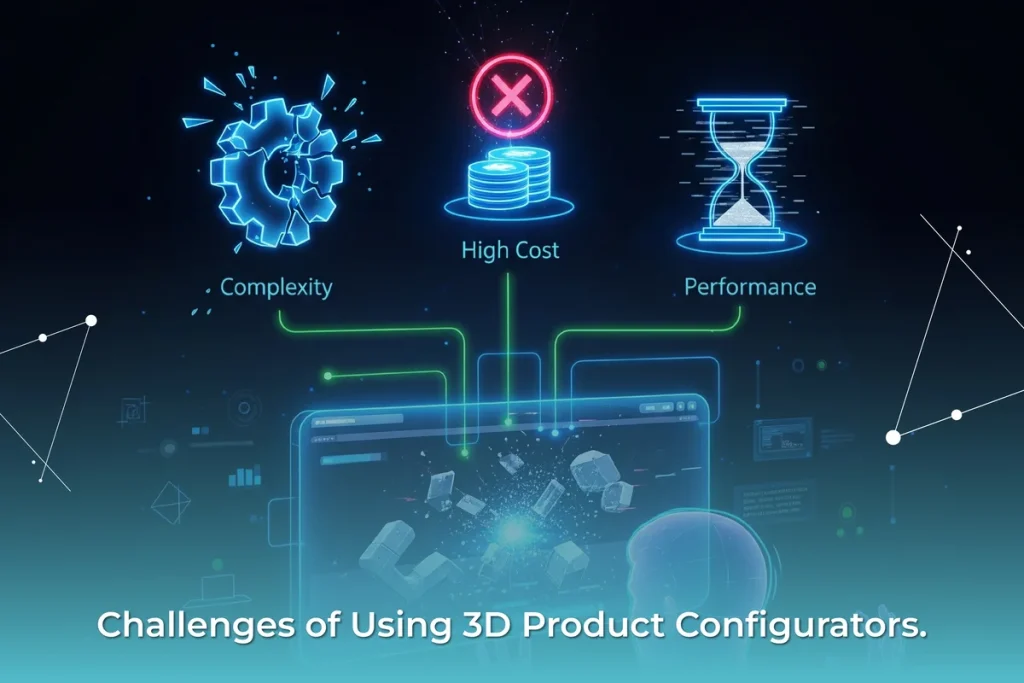
Even though 3D product configurators are transformative solutions to business, they also exhibit some challenges that you ought to know about:
- High Development Cost – The best 3D custom product configurator have a high development cost and can be time eating to maintain.
- Technical Complexity – The process of putting together 3D models with websites, mobile applications, or AR ports is not always straightforward. It must undergo fitting codes, renders and compatibility
- Device Limitations – Not every device (especially the low-end laptops and older phones) will be able to display in 3D without strain.
- Longer Load Times – With the 3D objects, it might take too long to load, thus driving the user crazy.
- Maintenance & Updates – New updates are necessary in order to make performance easy, bug fixing and improvement of new features as products evolve.
Benefits of Using 3D Product Configurators
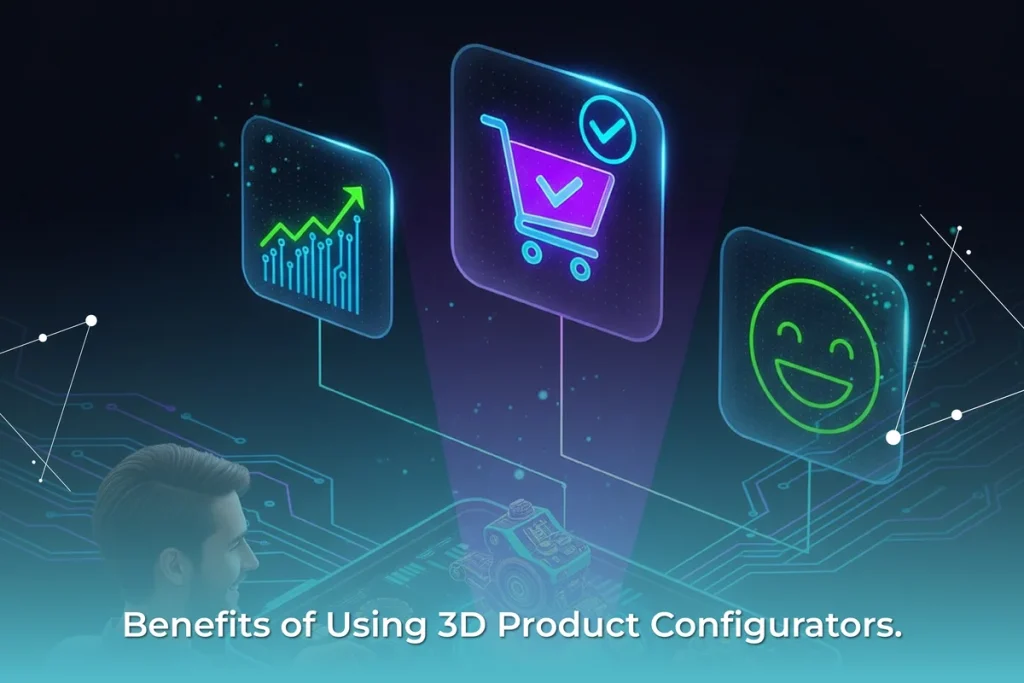
Implementation of 3D product configurators comes with strong benefits to businesses and customers. This is how they change:
- Enhanced Customer Experience – Shoppers can interact with products in real-time, zoom, rotate, and personalize details that in effect build a purchase confidence in buyers.
- Boost in Sales Conversions – Showing customers a realistic preview of the finished product, avoids hesitation and makes the buying decision quicker.
- Personalization at Scale – Each customer can customize products to their own exact taste: colors, sizes, materials, to give them an individual sense of exclusivity.
- Reduced Product Returns – By previewing the product to customers before their purchase, customers will know what exactly they are ordering and therefore reduce product returns.
- Stronger Brand Image – The use of interactive 3D technology makes a business stand out in a crowd of competitors and makes the brand appear to be advanced and customer oriented.
- Data-Driven Insights – The companies will be able to monitor the preferences of the customers, most used designs and very often used features to work out future product plans.
- Cost Savings in Prototyping – It is not essential to make many physical samples and they can have hundreds of variants and display them on the internet, so it saves time and money.
Partnering with Experts for Your 3D Product Configurator
To develop an effective 3D product configurator a professional is needed who has knowledge of 3D modelling, real time rendering and platform preparation. Collaborating with established teams such as Techversol means that your configurator can be interactive, scaleable and optimized to work on web pages, mobile applications and augmented reality applications.
With Techversol’s guidance, businesses can:
- Deliver an engaging, user-friendly experience
- Reduce product returns with accurate previews
- Boost sales conversions and customer satisfaction
- Save time and resources by avoiding technical pitfalls
Relying on companies specialising in 3D configurators and working with professionals such as Techversol enables brands to concentrate on expansion and customer interaction instead of fully comprehending the technological intricacy of deploying 3D configurators.
Curious How Professionals Build Interactive 3D Configurators?
The Crux!
A 3D product configurator is not a mere tool- it is a revolution in the way customers engage with your products at the highest levels of customization and preview and experience detail. Added to a mobile app, a website, or using AR, it augments engagement, sales, lowers returns, and puts your brand in position as innovative and customer-focused.
Techversol expert solutions can help companies develop smooth, interactive and scalable configurators that can delight consumers, personalizing the shopping experience and making the brand memorable to customers in a crowded marketplace, and transform a visit into a memorable shopping experience..
Read Also : What is a 3D Product Configurator: Complete Usage Guide
Reference
Vividworks: The Ultimate Guide: 3D Product Configurators
Dopple: Using 3D Configurators to revolutionize ecommerce
Zoovu: What are 3D product configurators and does your business need one?