Virtual reality uses computer modelling and simulation to let humans interact with an artificial 3D environment. The Virtual reality app development immerses people into a computer-generated environment that can simulate reality through interactive designs like headsets, gloves and body suits for sending and receiving information.
Here’s how virtual reality services actually work.
- It creates an illusion of being there, which is called telepresence.
- It uses motion sensors that can track the user’s movements.
- Users can explore simulated environments.
- Users can manipulate virtual objects using data gloves.
- It’s important that applications can work for education, surgery, etc.
The Virtual Reality Development: A Massive Transformation In 2026
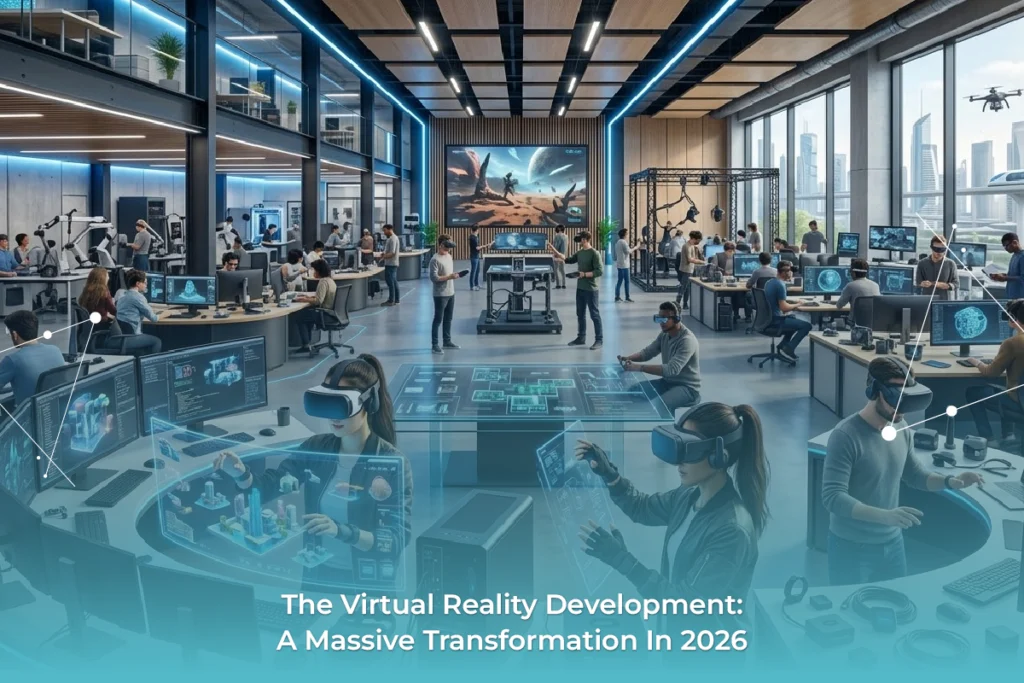
Virtual reality is undergoing a massive shift as we step into 2026. from hardware to content design, the virtual reality app development is here. It’s no longer an educational or a healthcare tool. The powerful new era of experiential technology will be undeniable. The coming year will expose the full potential of virtual reality with AI.
By 2026, we will witness the greatest transformation of VR. Here are a few improvements that we can expect from VR.
- Lightweight wireless headsets.
- AI-driven personalisation.
- Seamless social network.
- Deeper enterprise adoption in healthcare.
It’s moving from gaming to real-world applications in healthcare and education. You will now experience richer virtual reality services.
Major Virtual Reality Development We Are Going To Experience In 2026
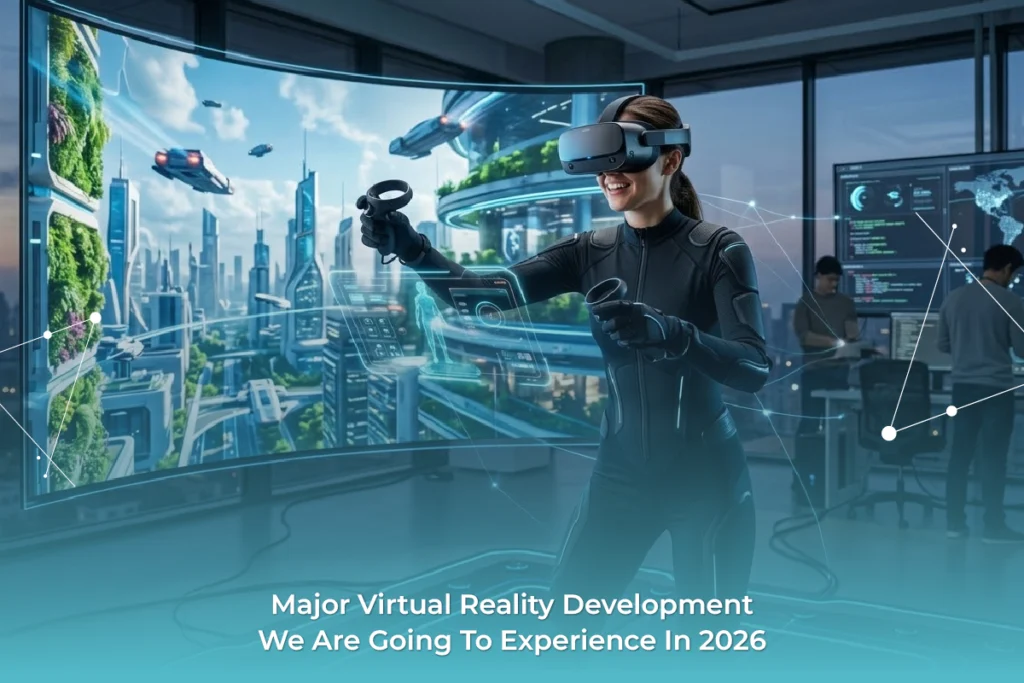
Here are the most important virtual reality app development trends you can experience in 2026.
Secure And Comfortable User Experience
The UX’s success depends on its usability. In the year 2026, we will experience
- Faster VR operations.
- Lighter hardware sets.
- Enhanced security.
- Biometric and behavioural data.
The privacy concerns regarding virtual reality services necessitate rigorous data protection to maintain customer support.
Growth In Extended Reality Ecosystems
The software system is booming, and it will open up low-code platforms along with modular tools offered by alternate reality that can help.
- lower barriers to adoption.
- Businesses can implement XR solutions.
- faster, cheaper and quicker experimentation.
Advanced Alternate Reality
By 2026, there would be an Alternate reality app development, yes, an improved version of alternate reality solutions. It will help with:
- The Try-ons.
- Interactive in-store brand experience.
- Dynamic customer support.
The Incredible Progress Made By Virtual Reality Services And Still Counting
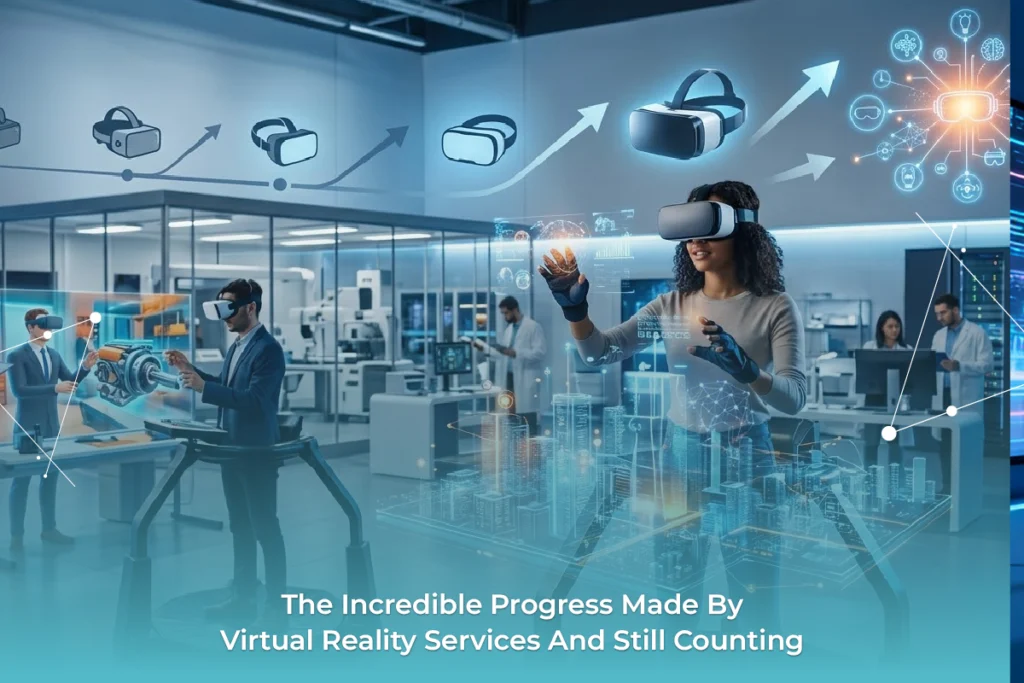
The future of alternate reality isn’t just another goal to accomplish, but it has taken time and consistency. It’s being built and experienced by everyone. At Techversol, we are blending technology with life.
Here are some main points on how humans are benefiting from VR.
- The market is booming, and VR is having a massive hit, say around 20 billion dollars.
- The younger generation, like Gen Z and millennials, is leading the charge with smarter and lighter hardware.
- Headsets are getting lighter and comfortable, with tethered technology becoming the norm.
The free-roam VR on the verge:
- With virtual reality development now, you will be able to walk, run and explore all the virtual worlds without any limits.
- With location-free roam, VR adventures are getting serious and sophisticated with vast spaces.
- At Techversol, we are using the most advanced VR technology to create a sophisticated multi-user experience that is even in the vast space.
4 Challenges the Future of Virtual Reality App Development is going to overcome
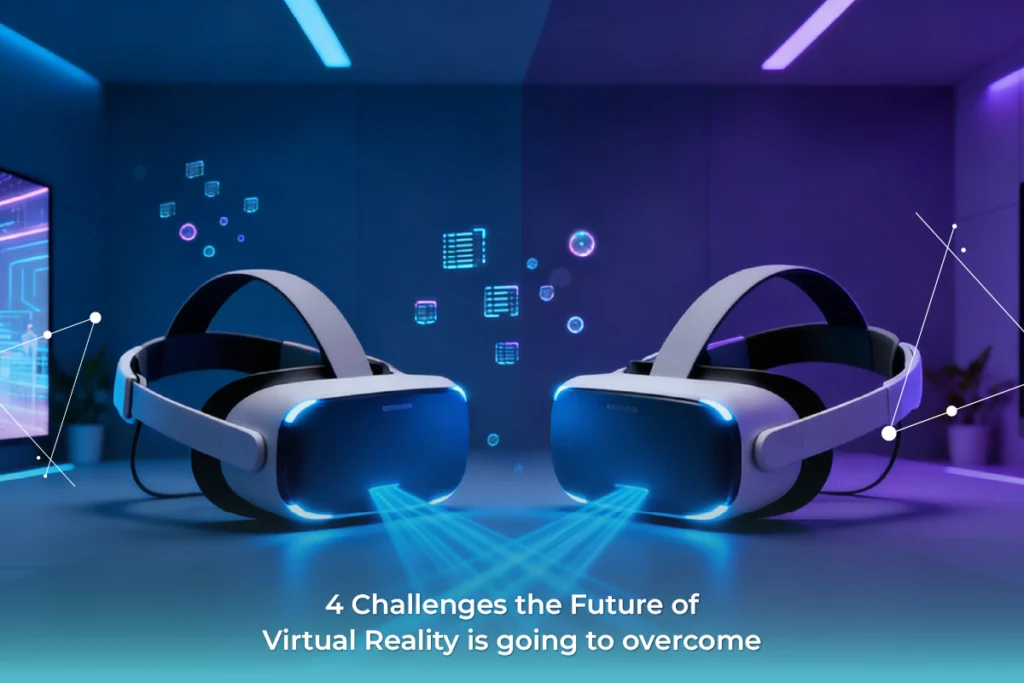
Although the future of virtual reality app development looks bright and it must be. But we shouldn’t get too excited because the next level world might be heading anytime soon.
1. Lighter hardware
The devices are improving, creating light and powerful wireless headsets that are also affordable, which keeps it a significant engineering challenge. Like
2. The Involvement of Artificial Intelligence
The AI can empower a lot of innovations, from virtual to non-player characters for generating personalised virtual environments.
3. The smart Interaction
The total reliance on the physical controllers is slowly diminishing. The alternate reality solutions will include, i.e the tracking systems enable the precise hand, fully body gesture controls, and the neural interfaces, like the basic brain computer interactions, that begin to emerge, the small command inputs.
4. Mixed Reality (MR) Convergence:
The line between virtual reality and Augmented reality is blurring. With virtual reality development, the new headsets can feature higher resolutions and colour passes through the cameras. Allowing the room for virtual reality and augmented reality to fit in.
The Invisible Computer: On-Device AI and the Rise of Spatial Computing Operating Systems
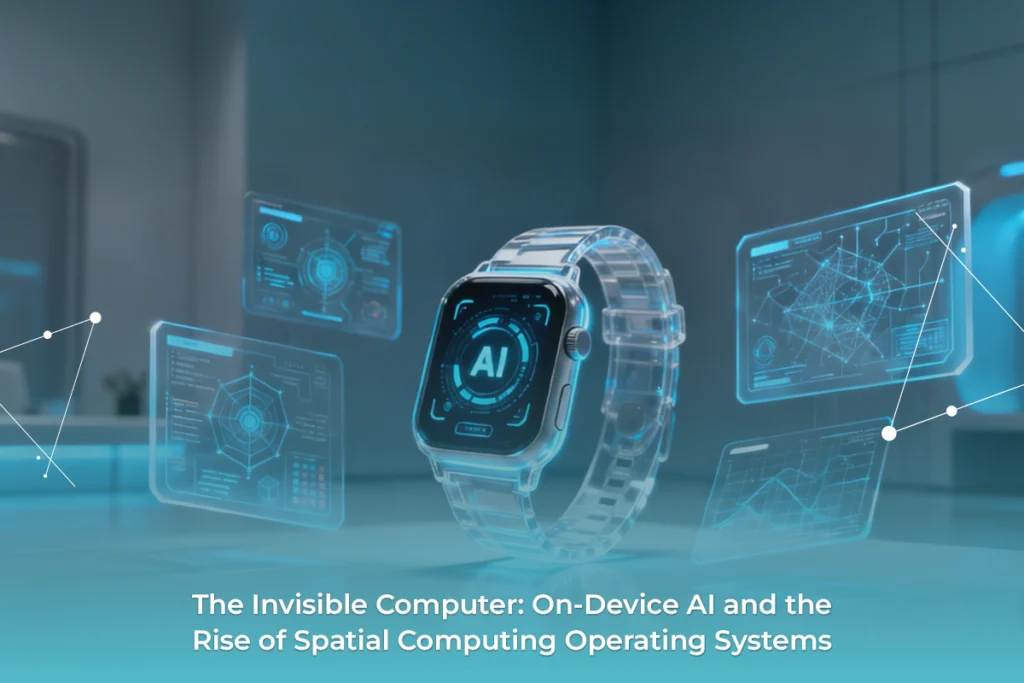
The most significant shift by 2026 will be the hardware computers. The tethers and external processing boxes will disappear. The whole computational powerhouse will be transformed into the headset itself. There will be chipsets specifically designed for parallel processing. Independence is the real key towards mobility and freedom.
From Tethers to Total Freedom
The future headsets will operate independently, and there will be no need for the external hardware. This kind of shift will unlock the mobility and seamlessness. The users now feel more anchored to the workstation.
Key changes include:
High-performance processors: this is built specifically for the AI workloads.
- The lightweight designs.
- This will feel like lighter clouds on the machine.
- The on-device models: they will adapt user behaviour in real time.
- Reduced latency: this will improve the comfort and peace.
Spatial Computing OS: A New Digital Layer
The software empowerment will evolve into spatial computing and operating systems. The design is not for the flat screens but for the 3D interactions.
You’ll be able to:
- Pin virtual screens on your wall.
- Collaborate with 3D models.
- Navigate the content and gestures.
- Blend the productivity and environmental fluidity.
AI: The Quiet Genius
AI will now be the core of the invisible computers. It will run locally, boosting privacy and responsiveness.
- Personalised environments.
- Smarter interactions.
- Minimal reliance.
- Adaptive systems performance.
Final Thoughts:
As we enter 2026, we can see that virtual reality isn’t just an experimental technology but is developing into a mainstream tool. Slowly reshaping how we can work, live, learn and connect. The AI-powered experiences are more accessible towards the developmental platforms. The VR is set to accelerate things faster. The business is embracing new challenges like accessibility and affordability. The future of VR isn’t coming; it’s already here for us to explore.