Skip to content
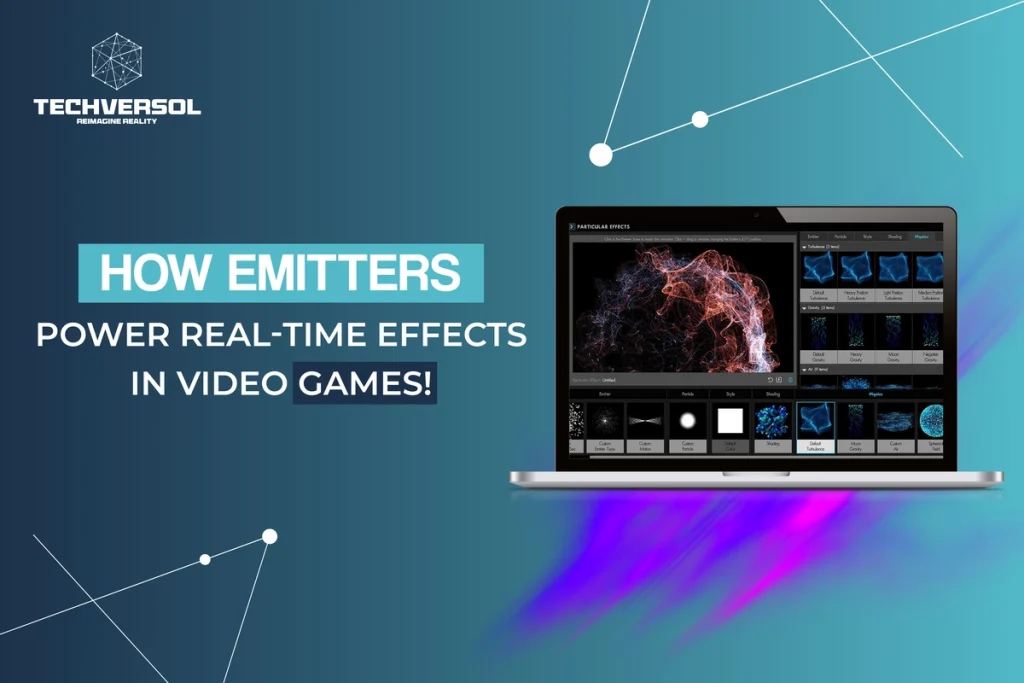
Video games and innovations remain groundbreaking, with developers employing emitters to bring beautiful fireworks and spell effects into games – revolutionizing gaming experiences while setting new standards.
Emitters are an essential element in video game graphics, producing beautiful visuals and immersive interactions that deepen player immersion. Here we explore their function, significance and examples of developers making effective use of emitters for outstanding experiences.
What is an Emitter?
Emitters in game design are essential tools that produce particles like fire, rain or magical effects; their presence plays an integral part in producing immersive visuals in video games.
A particle system is a collection of small, transient graphics used to simulate nature’s dynamics. Each particle, like a spark or water droplet, is guided by emitters that determine their actions and interactions in the gameplay experience.
Key Components of an Emitter:
- Spawn Rate – The number of particles an emitter generates over time.
- Particle Properties – The individual characteristics of particles, such as size, color, and shape.
- Velocity & Direction – Determines the speed and direction in which the particles move.
- Lifetime – How long each particle lasts before it disappears or fades away.
- Attractors/Forces – External forces like gravity, wind, or magnetic fields that influence particle movement.
- Texture & Materials – Visual appearance or texture used for each particle, such as smoke, fire, or rain.
Using these components, developers craft visually striking effects—like raging fires and sparkling magic—tailored to interact within the game, enriching players’ immersive experiences.

Level Up Your Game Design With Stunning Real-Time Emitter Effects!
How Emitters Work in Real-Time Effects
When you’re playing a game, you may not always realize the sheer amount of calculation and processing power that goes into creating the seamless effects you experience. Emitters are used in real-time to generate and update particles as you move through the game world. This means that every fireball, explosion, or rainstorm you see is being calculated on the fly and rendered to your screen within milliseconds.
Breaking Down Real-Time Particle Systems:
- Initialization – Emitters begin by setting the initial conditions of a particle system. For instance, fireball emitters might initiate by emitting millions of red-hot particles at once while rain emitters generate thousands of small translucent droplets.
- Particle Updates – Once particles have been created, each of them will be continuously updated – this could involve altering its position, size or transparency; applying forces like gravity or wind; or altering its motion through applied forces like gravitation or airflow.
- Rendering – Graphics engines then render these particles onto the screen using highly optimized techniques that enable millions of particles to be drawn simultaneously without impacting performance or frame rates.
- Decay and Removal – As particles age, their properties (such as opacity or size) change as their lives come to an end; when one disappears completely or gradually fades out from view.
Games are fascinating! Every time an explosion or rainstorm happens, it’s powered by millions of particles being created and updated in real-time, each with its unique behaviors and traits.
Why Emitters Are Essential in Video Games
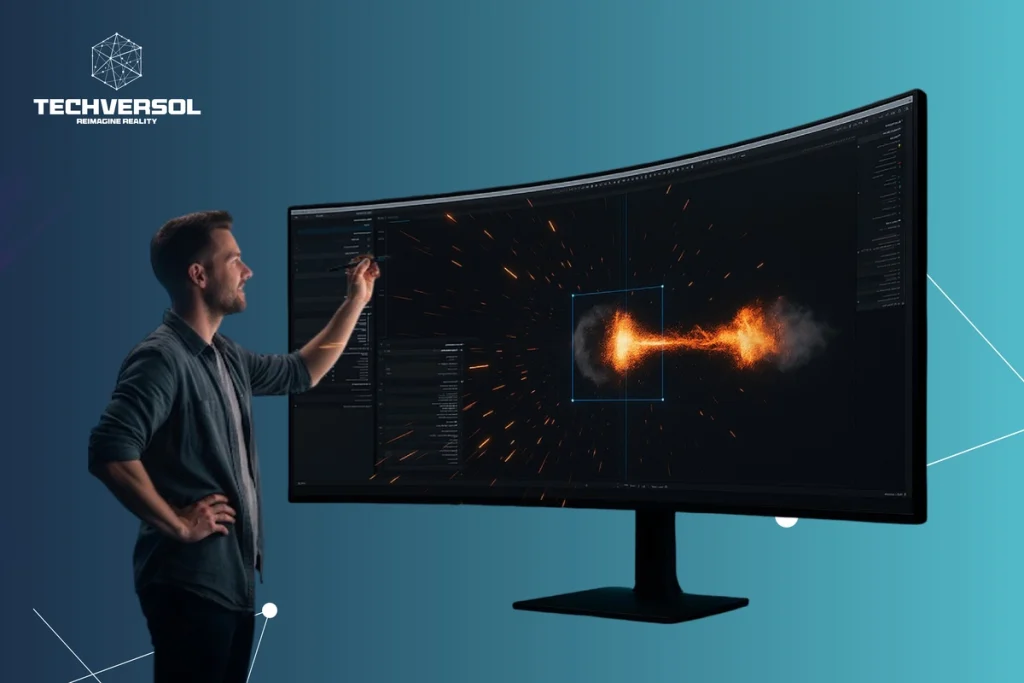
While it may be easy to overlook these small yet significant details, emitters are essential in creating a believable, immersive, and visually stunning world for players. Here’s why they are so crucial in modern gaming:
1. Enhancing Realism and Immersion
The authenticity of a game can define its success. Realistic elements like rain and fog significantly contribute to immersion. By integrating particle systems, developers craft environments where rainstorms and mysterious fog create a captivating atmosphere for players.
2. Improving Gameplay Feedback
Beyond just visuals, emitters give players essential feedback during combat. Each attack, whether it’s a bullet or a magical spell, triggers particles like sparks, making players feel their actions resonate with the game world rather than feeling detached.
3. Driving Atmosphere and Emotion
Honestly, emitters are a developer’s secret weapon. They can transform the atmosphere; think glowing particles creating enchantment or explosive effects cranking up the heat during battles. The way they can change a scene’s mood is incredible!
4. Simulating Complex Phenomena
The complexities of real-world phenomena pose challenges for game simulation. Utilizing particle emitters, developers can effectively recreate realistic effects like weather and explosions, grounded in science, ensuring smooth real-time rendering without the hassle of overwhelming detail.
5. Performance Optimization
Particle emitters can be resource-heavy, yet emitter efficiency is still considerable. By managing both particle numbers and lifetime effectively, developers can achieve visually striking visuals while keeping performance smooth – recycling particles is also effective at keeping this balance intact.
Bring Fire, Fog, And Fantasy To Life With Particle Emitters In Your Game
Real-World Examples of Emitter Effects in Video Games
Now that we understand the theory behind emitters, let’s take a look at how they are used in some of the most visually impressive and engaging games today.
1. Unreal Engine’s Particle System (Niagara)
Unreal Engine stands out among game engines by using particle emitters in advanced ways. Its Niagara particle system can handle complex and dynamic particle effects with precision; developers can create effects like fire, water, smoke and explosions which interact with their game environment through this particle emitter system. Niagara also allows great flexibility thanks to features like real-time parameter adjustments, physics simulations and material interactions in addition to interaction between characters in game world.
2. The Witcher 3: Wild Hunt – Magical Effects
The Witcher 3 is well known for its jaw-dropping visual effects, particularly those related to Geralt’s magical abilities. When casting spells emitters generate glowing particles that represent fire, ice and lightning as emitters create swirling and glowing particles representing fire, ice and lightning – not only does this look incredible but provides clear feedback as to where their magic has an impact or range of power in their spell castings.
3. Fortnite – Real-Time Dynamic Weather
Fortnite, a battle royale phenomenon, utilizes particle emitters to produce dynamic weather effects in real-time, from sudden downpours and lightning flashes to swirling tornadoes and thunderbolts – adding another level of immersion and intensity. These dynamic effects form part of Fortnite’s evolving map and have real impacts on game play; altering visibility, movement patterns and tactics used by players depending on weather changes.
4. Battlefield V – Destruction and Explosions
Battlefield V stands out with its destructible environments and chaotic battles, much of it powered by particle emitters. Explosions trigger an eruption of debris, smoke, fire and dust particles after every explosion – creating dynamic combat situations with lasting impression. Particle emitters also help add realistic details like broken walls, flying debris and burning vehicles for added realism in every scenario.
5. Overwatch – Hero Abilities and Ultimate Effects
Blizzard’s Overwatch employs particle emitters to create stylized effects for every hero’s abilities and ultimates, from Tracer’s blink to Reinhardt’s earth-shattering charge or Zarya’s gravity bomb, each ability is brought to life using colorful particle effects – not only visually impressive, but also helping players stay aware of these powerful moves in real time!
Future Trends: The Evolution of Emitters
As technology continues to advance, the role of emitters in real-time graphics will only become more intricate. Real-time ray tracing, machine learning, and procedural generation are just a few technologies that will enhance the capabilities of emitters in the future.
- Artificial Intelligence Integration: As AI becomes a greater component of game design, particle systems could more seamlessly adjust according to their context in real-time, learning from player actions and adapting accordingly – with real time particle effects changing as soon as they appear on-screen.
- More Dynamic Interactions: With future hardware advances, particle systems could become even more responsive to their surroundings – imagine fire particles reacting not just to physical forces but also real-time environmental influences, like wind blowing smoke around.
- Cloud Gaming & Streaming: As games increasingly transition towards cloud platforms, emitters-powered real-time effects will continue to be optimized for lower latency environments so they look beautiful even on lower-end devices.
Create Lifelike Weather And Effects In Real-Time With Particle Emitters
The Bottom Line!
To sum up, Emitters aren’t just decorative; they play an invaluable role in providing real-time effects in video games, from raindrops to explosions – creating immersive gameplay and visually striking environments! Next time you encounter dramatic effects in-game, appreciate all that technology behind it!
The game world is evolving — particle emitters will help developers craft jaw-dropping visuals that make emotional impacts players will never forget.
So, developers and gamers, keep in mind that those dazzling effects are thanks to emitters bringing real-time magic alive!
Read Also : What is the definition of a Video Game Developer?
FAQs:
Q1. What exactly is a particle emitter in video games?
Video game particle emitters create dynamic visual elements resembling smoke or sparks and regulate their behavior and timing to add depth and dynamism to real-time gameplay.
Q2. How do particle emitters improve gameplay experience?
Incorporating particle emitters gives games a way to visually respond to actions like shooting and spellcasting, with sparks and explosions that enhance immersion and player connection.
Q3. Can particle emitters simulate real-world weather or physical phenomena?
Particle emitters create realism for games by simulating weather and physics effects, with interactive, responsive worlds maximizing the gamer’s experience.
Q4. How do modern video games ensure that particle effects don’t affect game performance?
Particle systems need to be performed, but with pooling and level of detail optimizations, current engines have stunning visuals with breathtaking performance, making rapid play smooth and pleasurable.
Q5 What are some of the latest trends in emitter technology for video games?
The newest emitter technology brings the game more intimately to life—AI effects change based on players’ playstyles and more accurate ray tracing provides realistic lighting, completing cloud gaming for any device.
Reference
https://www.createwithswift.com/particle-emitter-in-reality-composer-pro/