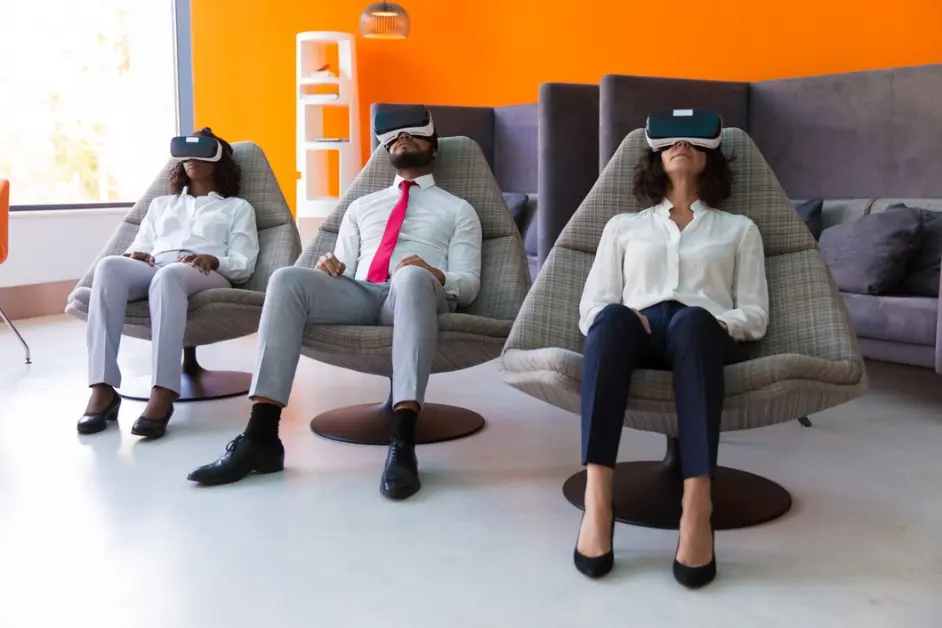
Organizations are frequently pursuing innovative methods to improve their corporate training programs in a fast-paced competitive business landscape. The integration of alternate reality (AR) technologies is transforming the traditional technique to training, providing immersive learning experiences that improve learning results and employee engagement.
Techversol, in this article, will let you explore how alternate reality is shaping the future of corporate training programs, providing businesses with effective tools to encourage skill development, collaboration, and adaptability.
What is the Alternative Reality meaning?
It is crucial to understand the alternate reality before delving into the specifics of its impact on corporate training. AR overlays digital content onto the physical world meanwhile, virtual reality (VR) creates fully immersive environments. This integration of digital and physical experiences allows users to interact with both elements simultaneously, offering a more engaging and immersive learning experience and environment.
The Evolution of Corporate Training:
Corporate training, historically, relied on traditional techniques such as lectures, manuals, and online courses. While these strategies have their merits, they usually lack engagement and practical application. Organizations, as a result, have begun exploring more innovative training solutions, recognizing the need for dynamic and immersive learning experiences that resonate with employees.
The Advantages of Alternate Reality in Corporate Training:
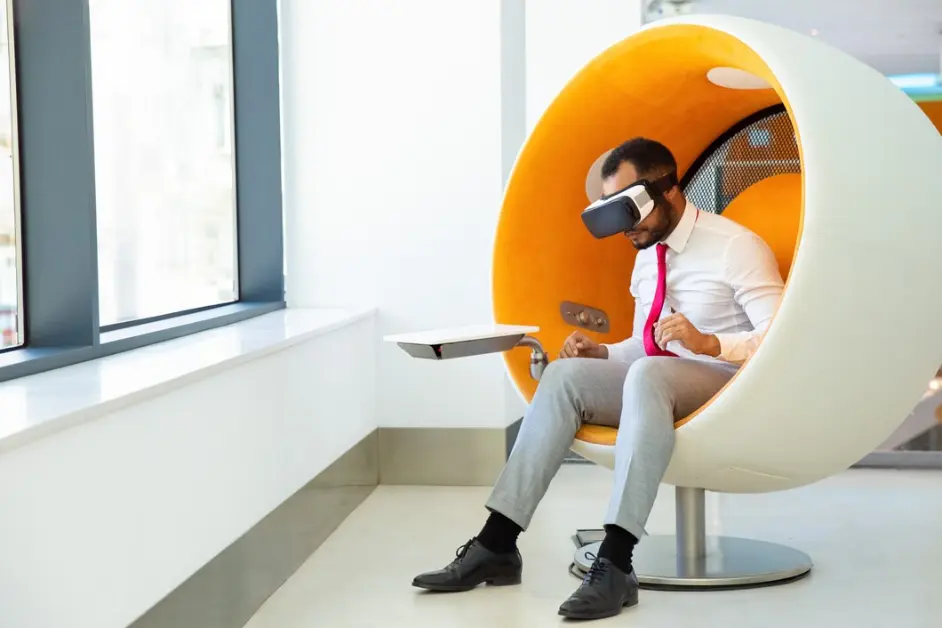
Enhanced Engagement:
One of the most significant benefits of integrating alternate reality into corporate training programs is the growth in employee engagement. Traditional training methods can often feel monotonous, leading to decreased retention and enthusiasm. AR experiences, on the other hand, capture attention and encourage active participation.
For instance, employees can use AR applications to visualize complex concepts in real-time, turning theoretical knowledge into practical skills. AR creates a hands-on learning environment that keeps employees invested in their training whether it’s simulating a sales pitch or navigating intricate machinery.
Real-World Simulations:
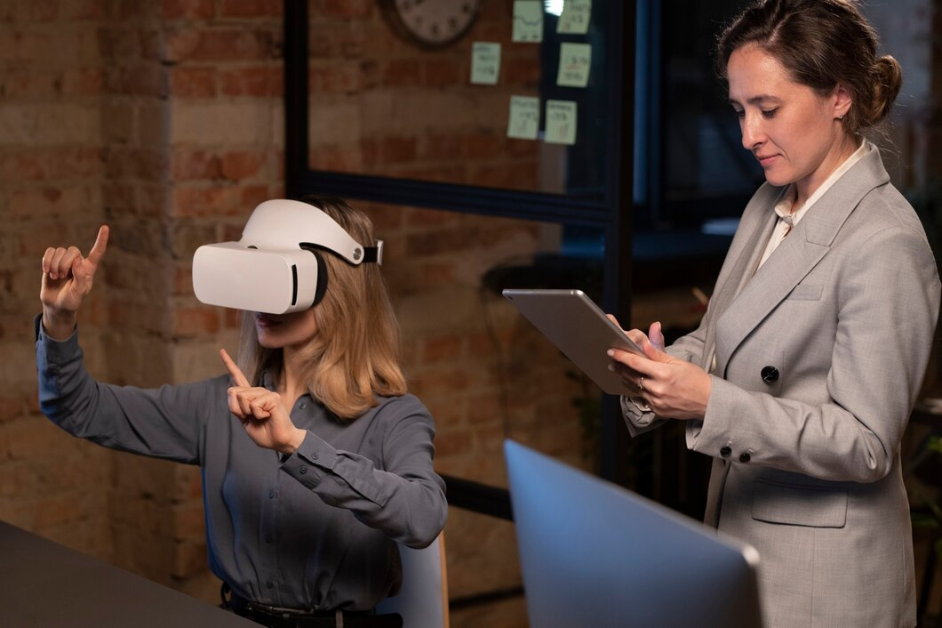
AR allows organizations to offer realistic simulations that closely mimic actual job scenarios. This is specifically useful in high-stakes environments, such as healthcare or emergency response, where employees must make quick decisions under pressure. By using AR to create realistic training scenarios, organizations can prepare employees for real-world challenges without the associated risks.
Imagine a medical training program where aspiring surgeons practice approaches on virtual patients, acquiring invaluable experience without the fear of harming a real person. This applicable application of skills not only boosts confidence but also enhances the quality of training.
Customized Learning Paths:
Every employee comprehends differently, and a one-size-fits-all strategy for training can be ineffective. AR allows organizations to create customized learning paths customized to individual requirements and preferences. Employees can progress at their own pace, revisiting concepts as required and focusing on areas where they need more support.
For instance, a retail organization could utilize AR to deliver personalized training modules for its staff, letting each employee navigate through product knowledge, customer service skills, and sales techniques based on their previous performance. This level of customization enables a more effective learning experience and promotes continuous improvement.
Immediate Feedback and Assessment:
Immediate feedback is essential for effective learning. Employees, with AR technologies, can obtain real-time feedback on their performance during training exercises. This instant insight allows learners to understand their stability and areas for improvement, allowing for rapid adjustments and mastery of skills.
For instance, a sales training program might use AR to simulate customer interactions, allowing employees to practice their pitches. The system, as they engage with virtual customers, can provide instant feedback on their communication style, body language, and response strategies, facilitating immediate learning and adaptation.
Increased Collaboration:
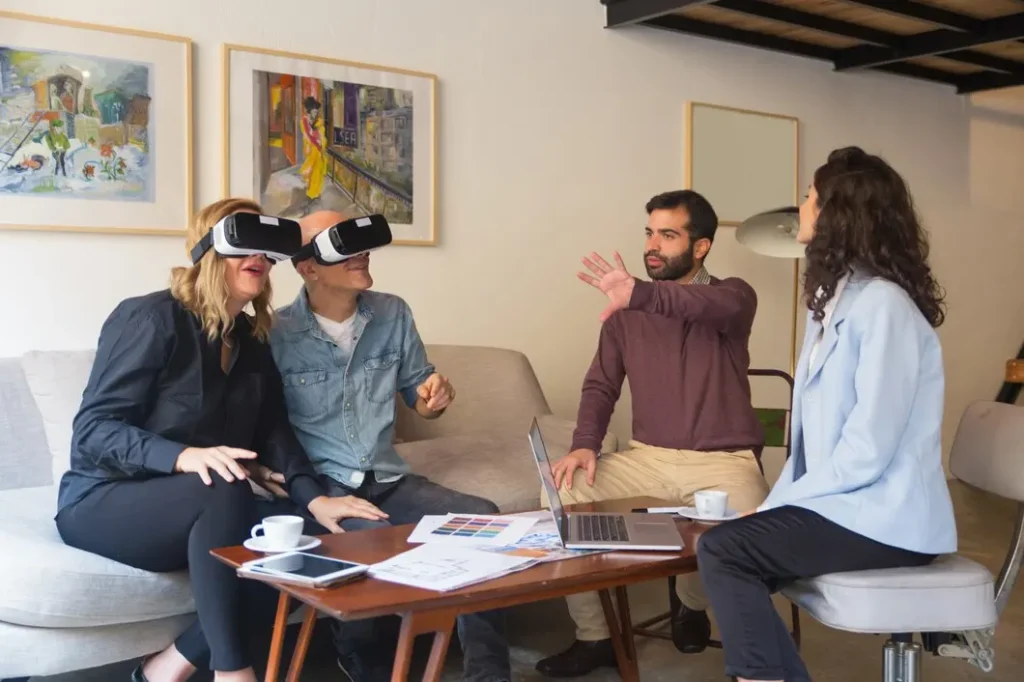
Corporate training frequently involves team-based tasks that need collaboration and communication. AR can improve these collaborative efforts by allowing employees to engage in joint training sessions, regardless of their physical location. Virtual environments facilitate teamwork, enabling employees to work together on projects, solve problems, and share insights in real-time.
Imagine a global team spread across various nations working on a product development project. Using AR, they can collect in a shared virtual space, brainstorm ideas, and visualize prototypes, all while interacting as if they were in the same room. This collaborative process encourages a sense of community and teamwork, enhancing both the training experience and workplace culture.
Challenges and Considerations:
While the advantages of integrating alternate reality into corporate training programs are clear, organizations must also consider potential challenges. Implementing AR technology requires an initial investment in hardware and software, as well as ongoing maintenance. Additionally, employees may need time to acclimate to new technologies, and organizations must ensure that adequate support and resources are available.
Furthermore, content development for AR training programs can be resource-intensive. Companies need to collaborate with instructional designers and AR developers to create effective training modules that align with their objectives.
The Future of Alternate Reality in Corporate Training:
The future of alternate reality in corporate training looks promising as technology continues to evolve. Advancements in AR will probably lead to even more immersive learning experiences, such as multi-sensory simulations that incorporate touch and smell, further enhancing the learning process.
Additionally, the integration of artificial intelligence (AI) with AR technologies can provide more personalized training experiences. AI algorithms can analyze employee performance data to create adaptive learning pathways, ensuring that each employee receives the training they need to succeed.
Conclusion:
Alternate reality is reshaping the future of corporate training programs by improving engagement, offering realistic simulations, and promoting customized learning experiences. Organizations stand to benefit from improved employee performance, increased collaboration, and a culture of continuous learning as they assume this technology.
Businesses, by investing in AR training solutions, can prepare their workforce for tomorrow’s challenges while encouraging an environment that fosters innovation and adaptability. The future of corporate training is here, and it is more effective and impactful than ever before. Companies will not only improve their training programs but also set themselves as leaders in their industries, keen to thrive in an ever-evolving landscape as companies harness the power of alternate reality.
FAQs:
What is visualization training at its core?
It’s about making a graphic and controlled environment in your mind. Begin with something specific. Picture yourself gearing up for a practice session or a game. Visualize lacing up your shoes, the texture of the equipment, and the sounds around the field or court.
What is audio visual training?
Audio-visual (AV) learning is a type of learning that is defined by the delivery and the use of instructional content that involves sound (auditory stimuli) and sight (visual stimuli).
What is the purpose of data visual training?
Data visualization helps to tell stories by curating data into a form easier to understand, highlighting the trends and outliers.
Related Readings
- How to Use VR for Relaxation: Explore the calming benefits of virtual reality and how it can help reduce stress and anxiety.
- Is VR Bad for Your Eyes?: Understand the potential effects of virtual reality on eye health and how to mitigate any risks.